

















As of July 17, the City of Portland has approved the installation of lights for Grant High School’s athletic field — also known as the Grant Bowl. The process of approval has been long delayed by a series of logistical and financial issues involving the school district, the city and the Grant Park neighborhood.
The City of Portland hosted a land use hearing on June 11, 2025, intended to review a request to install three new light poles in the Grant Bowl, replace one previously installed pole and raise the maximum height of the poles from the typically required 50 feet to 80 feet. The meeting also aimed to discuss approval conditions for the lights and hear testimonies from the Grant community.
A staff report presented by City Planner Andrew Gulizia under Portland Permitting & Development (PP&D) recommended that the project be approved by the land use hearing officer with certain conditions to minimize noise and light interference with the surrounding neighborhood: School-related bowl use must end by 9:30 p.m. and lights must shut off by 10 p.m.; non-school-related bowl use must end by 9 p.m., with lights shut off by 9:30 p.m. and the public address system can only be used for Portland Public Schools (PPS) sporting events, and must be shut off by 9:30 p.m. Additionally, PPS’ custodial staff must clean up litter after any event.
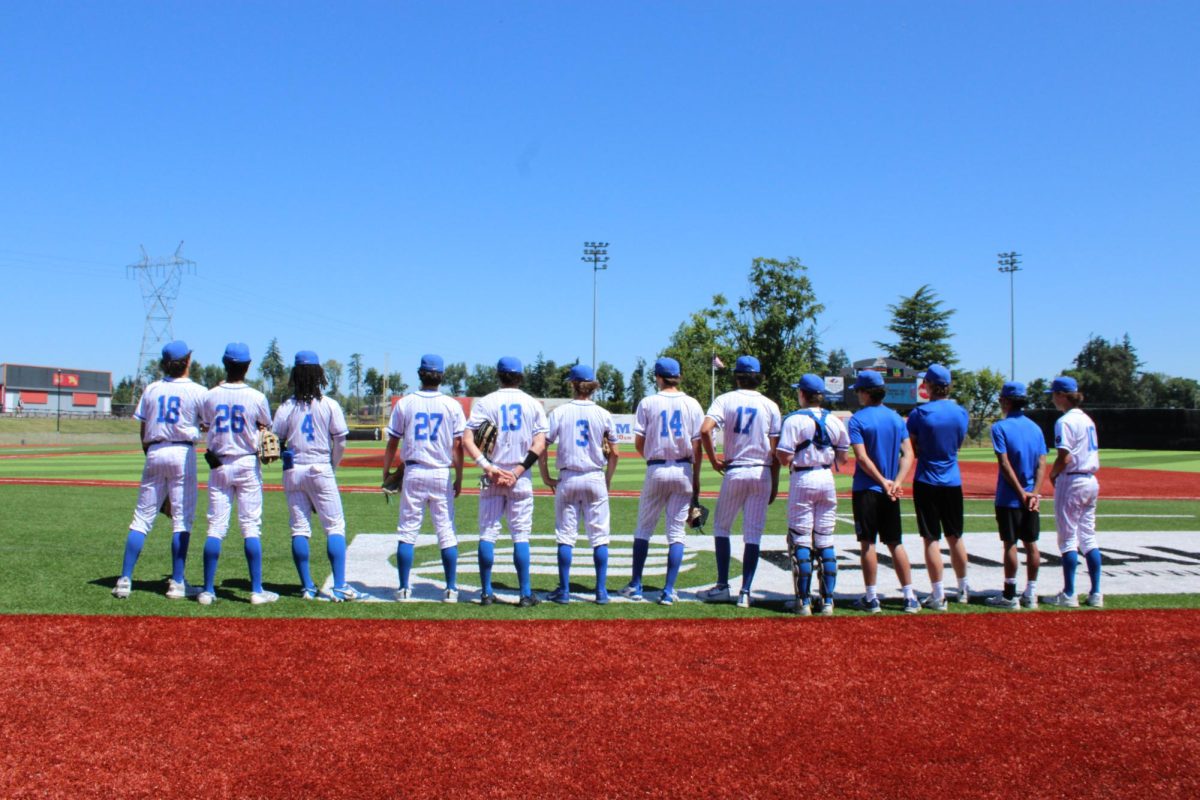
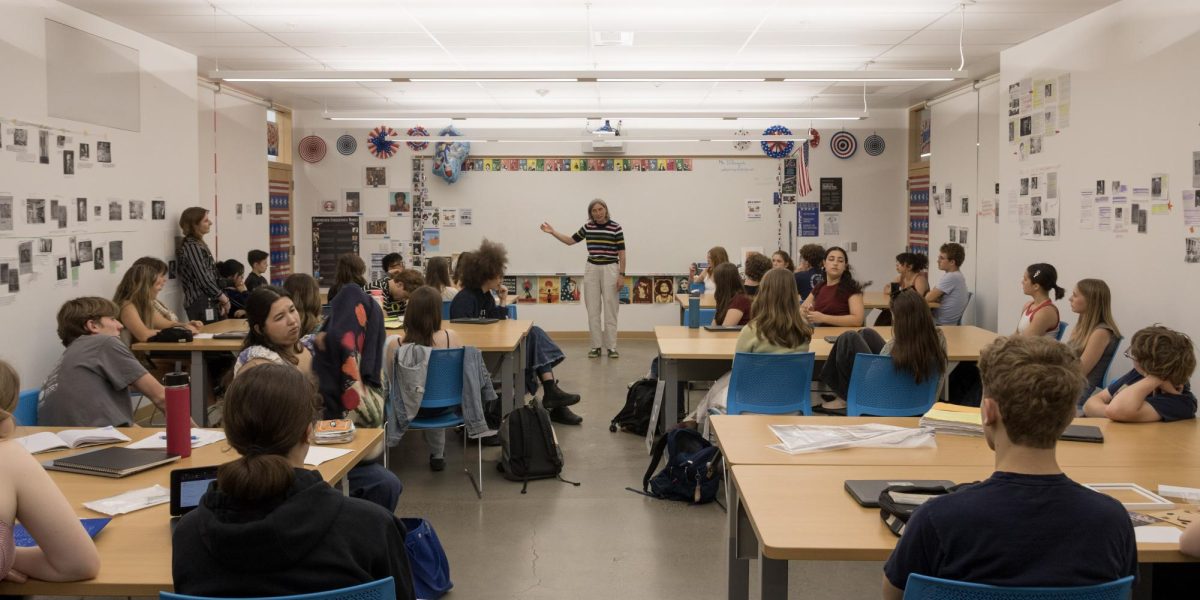
Attendants of the hearing included many members of the Grant Park Neighborhood Association (GPNA) and the Grant Bowl Community Coalition (GBCC), along with Grant parents, coaches and alumni — the overwhelming majority of whom offered testimonies in support of the urgent installation of the light poles.
The Grant Bowl has long been a point of discourse in the Grant neighborhood. In 2023, the bowl was deemed unusable for student athletes by PPS after the artificial turf failed a series of safety tests. The district eventually agreed to replace the turf after the GBCC fought to acquire the lease from the city that would allow the district to resolve the issue rather than wait for the City of Portland to take action.
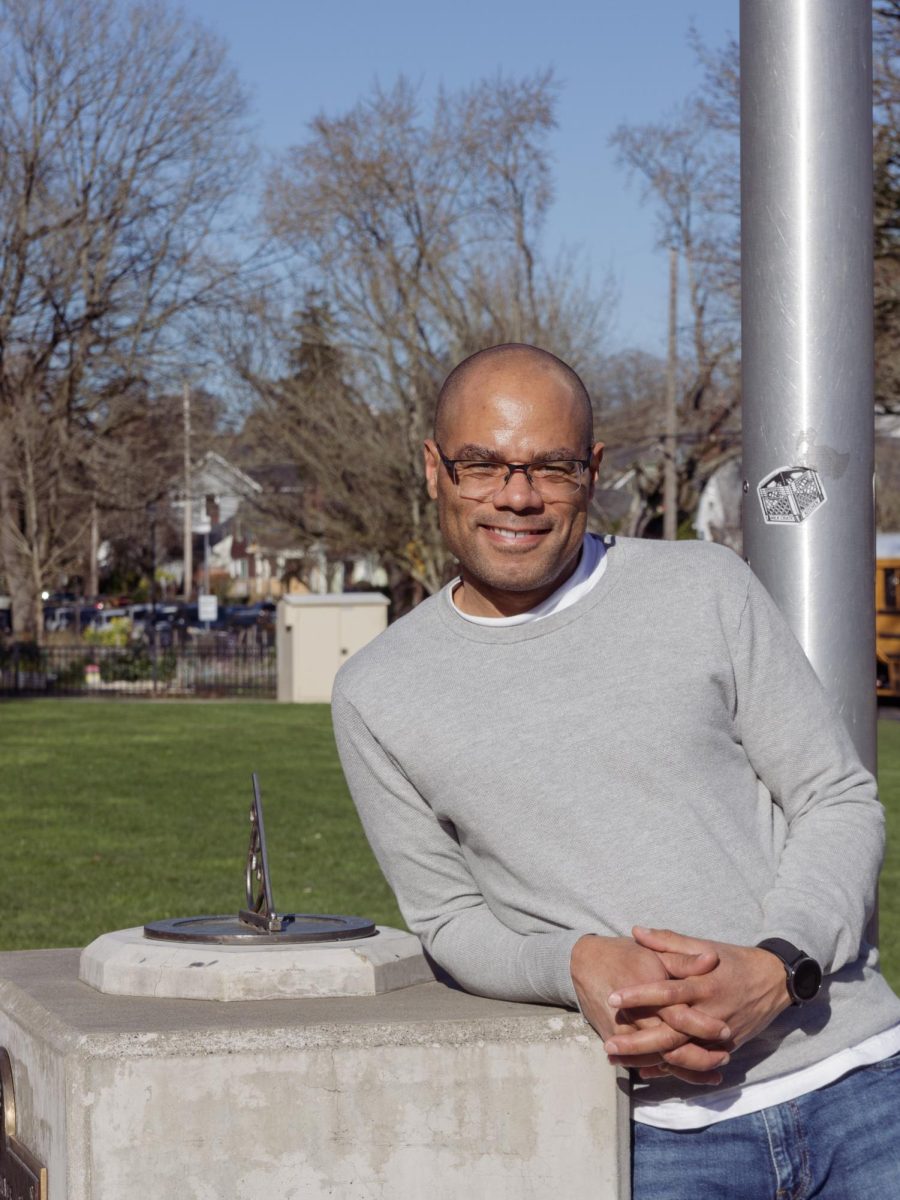
“We knew that in order to be successful, we needed to shift control of the bowl from the City of Portland to PPS,” says Virginia La Forte, a co-founder of the GBCC who was recently elected to the PPS Board of Education. La Forte is a longtime member of the Grant community — one of her children is a Grant graduate and the other is a current student. Although neither has been involved in sports at Grant, the cause is still extremely important to her. “It’s not just about athletics. It’s a social connection … outside of your phones, like, to actually have a place to go in real life, to hang out,” she says.
Grant is the only high school of its size in Oregon to have a football field without field lights. This issue poses significant safety concerns which prevent teams from practicing and playing games in the bowl after dark. Student athletes are forced to practice and play elsewhere, which often significantly cuts into instructional hours. Stephanie Antipov, whose child is an athlete at Grant, says, “Over the past three years of his time, (my child has) had to leave class early … multiple times a week, starting his freshman year — his most critical years in high school.” Grant Principal James McGee noted during the hearing that many students are academically affected by reduced instructional time, but especially those who are already what he calls “academically vulnerable.”
According to La Forte, the reason why this issue took so long to be resolved is a long-standing dispute between Grant and a few of its neighbors, which has resulted in PPS choosing to prioritize the modernization of other high schools with its limited funding. “No one can believe that the lights didn’t go in over a couple of people,” she says. “I talked to someone at PPS who was involved, and they said the biggest mistake that the Grant community made at the time is they didn’t organize, and that is why we organized.”
In May 2024, the PPS school board’s Facilities and Operations Committee agreed to the City of Portland’s proposal to install lights at the Grant Bowl with one condition — the community would have to fund it entirely. This meant that the GBCC needed to come up with an estimated $500,000 to purchase and install the lights.
The GBCC was fundraising with what it called the “Triple Threat Donation Challenge” for the past year in order to reach this goal: After the Evans family, a local donor, pledged $50,000 toward the cause, they challenged the community to raise another $50,000. If this goal was met, they would contribute another $50,000, raising the family’s total donation to $100,000. Through this campaign, the GBCC was hoping to nearly reach the halfway mark to its goal. It remains unclear whether the challenge was successful.
The GBCC’s efforts have extended far beyond fundraising. La Forte focused on the historical context of the Grant Bowl as well as the present-day situation in order to challenge the long-standing assumption that the bowl was a part of the city park, not the school. “We learned that Grant Park and the high school were constructed together,” says La Forte. “It was part of one plan, which is contrary to what the Oregon historical database says.” The city offered to build the tennis courts, pool and bowl to be used by students in exchange for PPS buying the land that now makes up Grant Park. This shifted narrative gave the GBCC new ground to stand on. The Grant Bowl and Grant Park were, and are, intended for student use, shifting the power from the city to PPS.
Throughout the GBCC’s process of researching and fundraising for the lights, it has been in constant communication with the GPNA. “We knew that to move the ball forward, we needed to make sure that any concerns were being addressed. So we reached out to the neighborhood association, and they’ve been very helpful and collaborative the entire time,” says La Forte.
A survey conducted by the GBCC, as well as a board vote by the GPNA, seemingly disproved the notion that the Grant Park neighborhood was not in favor of the lights — with both showing overwhelming support. Many community members joined the Land Use Hearing online meeting in June to testify in support of the urgent installation of field lighting for the Grant Bowl. “What I’m asking (for),” says Grant head football coach John Beck, “is an equitable solution to a problem that we’ve had here at Grant for a while — getting lights … (and) eventually a small facility so kids can enjoy home games and practices and something the community can be proud of.” Multiple parents of Grant student athletes also voiced their concerns over the lack of lighting, stating worries about their children’s education and inability to use their school’s facilities.
The GPNA, although in favor of installing the lights, offered multiple conditions that it would like to be addressed as the plan isfinalized. These included more extensive training for Grant coaches on volume and noise in hours preceding 7 p.m., which it requests to be a cutoff for “amplified sound” in the bowl outside of Grant games; at least three additional trash cans to be added to exits of the bowl; a commitment by PPS to remove fencing limiting access to the bowl after Grant events have taken place and a requirement for bus drivers to park solely on 36th Avenue — instead of US Grant Place — along with signage to perpetuate this agreement.
La Forte found that all of the requests made by the GPNA and PP&D were completely reasonable and feasible for future planning and installation. “We would be asking for the same thing if we lived across the street,” she says. The deadline for submitting any additional statements was June 11 at 4:30 p.m., and La Forte reported that no other “negative” letters or comments were received. The proposal submitted by the GBCC was formally approved by the city auditor who hosted the land use meeting about a month later. The auditor approved the installation with the conditions proposed by Gulizia at the land use hearing. “The installation could start during the football season without being too disruptive, but I think that before track season next year is definitely in the cards,” says La Forte