





















Mia Decker
Grant High School senior Mia Decker busses tables and greets customers at ¿Por Que No? Taqueria on Mississippi Street. Decker has spent four summers working there, building skills and earning money.
Working as a busser through the summer, she enjoys her twenty-hour work week — long enough to earn some cash while still allowing time for summer activities. “My summer of my eighth grade year I was wanting to find a job, and that kind of seemed the easiest because I knew them really well,” says Decker. “As a 14-year-old, it’s scary to get a job when a lot of people don’t hire that young.”
Her connection with the restaurant’s owners allowed her to land the job at such a young age. “This restaurant has been a family type of restaurant we’ve gone to my entire life … so we know everyone there really well,” says Decker. Since talking to the owners and employees of the restaurantfour summers ago, Decker has stayed loyal to the job. She regularly works three shifts a week, either from 12-5 p.m. or 5- 10 p.m.
For Decker, like many in the food service industry, a typical day at work is full of interaction and activity. “Usually (my) main jobs are bussing tables, wiping tables, back-stocking salsas or napkins … bringing appetizers to people and kind of just talking to people, helping them around and telling them where to go,” says Decker. These aspects of the workplace have helped her in her personal life. “When I started at ¿Por Que No?, I didn’t have as many skills in terms of multitasking, connecting and just being a louder person with random people (I) don’t know,” Decker says. “It helped me a lot with just socializing, keeping track of a lot of things going on all at once.”
Trying to stay organized while in a busy and occasionally stressful environment has given Decker the opportunity to improve her communication skills with both coworkers and strangers. She’s discovered a passion for working with people that she plans to pursue later in her career. “The main thing I learned about myself is that I’m a people person in my future I don’t want to be on my computer working at home, I need to be out having a structured type of job,” she says.

Mazen Chehab
Grant senior Mazen Chehab spends his summers helping golfers with their shots, strategies and equipment at Portland Golf Club. Chehab gets to earn money and make new connections working as a caddy while doing what he loves most — learning and teaching.
After hearing about an opening from a friend, Chehab showed up and landed the job: A few tests on golf knowledge and skill were all he needed. His job offers lots of freedom and flexibility by allowing the caddies to choose when to come in. However, Chehab says, the earlier, the better. “A typical day is probably getting up around … 6:30 a.m. It just depends on the day — busier days you have to get up earlier. When you get there it’s first come first serve, unless you have a caddy or a person assigned to you already,” says Chehab. “They want to make it as fair as possible.”
Working early-morning shifts on such a flexible schedule can make it easier to find time to see friends and do other activities in the summer. Thanks to this, Chehab does not struggle to balance his work with his social life. “I can work up to five days (a week), but I don’t actually have a schedule. They’re not like, ‘Oh, you have to work Saturday,’” says Chehab. “You can come whenever you want, which is nice. You don’t have to take time off or anything like that.”
Working as a caddy comes with its perks—one being free access to the golf course. “The most rewarding part is definitely playing the course for free. It costs 100 bucks to play, which is big savings. And it’s a nice place, it’s the riverside of (the) Columbia,” says Chehab.
Another upside of his job is the people he has been able to meet. “One of the guys I caddy for, he knows LeBron James’ agent and he knows Adele, and a lot of famous people. It’s just really interesting, you can really meet these people and make new connections,” he says. Chehab will continue to work at Portland Golf Club until he graduates high school, hopefully meeting more celebrities and making big tips.

Sophia Tursich
Senior Sophia Tursich works as a lifeguard at Columbia Edgewater Country Club during summer break. There, she’s able to watch out for others while soaking up some sun.
A connection with a friend landed her the job. “I texted my friend Maddie, who works there, and was asking her about job openings, and she got me on board,” says Turisch. “I like how low maintenance it is. The training was really intense and I feel like the job is super chill — you just kind of hang out,” she says.
For Tursich, the hard work of training paid off. She gets to spend her summer relaxing and confidently doing her job. The majority of the work was done before she ever sat in the lifeguard chair.
After working with people around a pool all day, Tursich’s swimming skills have greatly improved. “Just from training and in-service training at my job, I feel like I’m a much stronger swimmer,” she says.
Flexible hours are an added perk that allow Tursich to remain available in the summer to play tennis with friends and enjoy her time off school. “We work 20 hours a week, usually, and the hours are super good. The opening is from 11 a.m.-3 p.m. and the closing is 3-7 p.m., so I’m able to do stuff before or after, no matter what,” says Tursich.
With a relaxed schedule, Tursich can earn money in a fun way. However, the position requires Tursich to have a lot of knowledge to ensure customer safety, which could help her build skills for a future career. “I’m wanting to go into pre-medicine in college, and I feel like a lot of the CPR stuff I learned through this definitely helps,” she says. Taking steps toward life after high school helps her move toward a specific career path. As she works as a lifeguard, Tursich is paving a path to her future one shift at a time.
Kael Uyeda
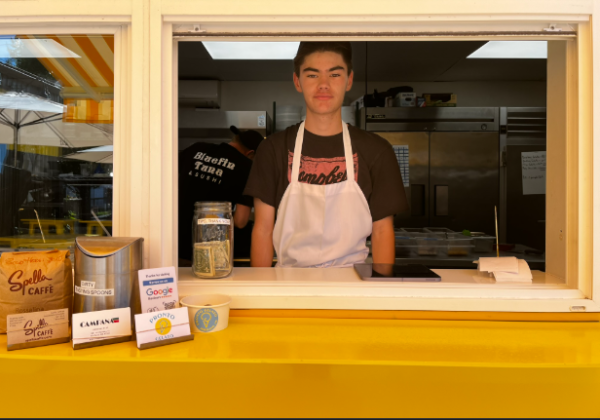
Grant senior Kael Uyeda has been working at Pronto Gelato since the summer of 2024. This job — and its flexible hours — has allowed him to develop important skills while still having time to enjoy his summer.
Being an ice cream scooper means more to Uyeda than a paycheck. He’s gained skills in customer service, learned about food handling and gathered job experience to add to his resume. “I like, obviously, getting paid. It’s minimum wage, but it’s practice doing a job,” says Uyeda.
He first learned out the job from his dad, who told him about the opening. Uyeda later walked up to the shop to ask about the job, and was told to email them. After receiving no response, he returned to the store to follow up. Soon after, he was hired.
Working the cash register, Uyeda spends most of his time interacting with customers. He says it’s usually easy — until closing time. “(The customers) stay kind of late, even after closing. Sometimes they keep coming in, and we have to close,” says Uyeda.
Uyeda works the closing shift on most days from 5-8 p.m.; however, the flexibility of the schedule gives him time to take advantage of summer during the day. Once the shop closes at 8 p.m., there’s still work
to do. From 8-9 p.m., the dishes are done, the shop is cleaned and the money is counted.
“It’s just nice to have the morning and day,” says Uyeda. “I work in the evening, come home, eat dinner and go to bed.”
Food service jobs, like his at Pronto Gelato, provide opportunities to many younger workers because “it’s a simple job, and there’s always people looking for employees.” Interacting with customers and gaining a food handlers’ license add to the job’s appeal.
Uyeda has found his job in the food service industry to be a flexible way to make money. He recommends it to other high school students who are looking for a way to earn money and develop workplace skills.
Eli Peterson
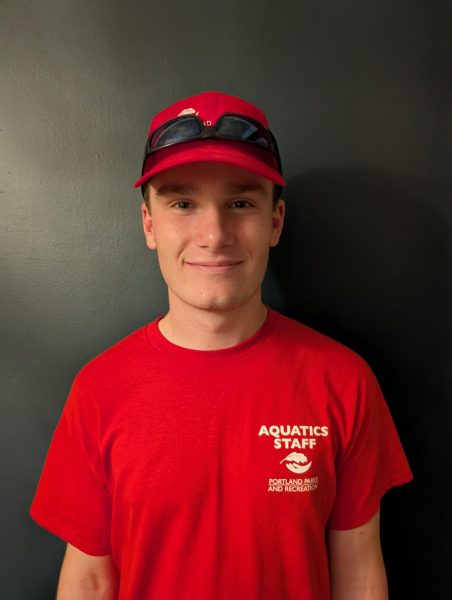
Grant senior Eli Peterson has spent his first summer working as a lifeguard at the Grant Outdoor Pool. The job comes with some serious responsibilities as well as a fun environment and nice coworkers.
Peterson enjoys the high pay that lifeguarding offers while also providing a lot of flexibility. Like Peterson, many of the other lifeguards are teenagers who have busy summer schedules. Being able to schedule himself has allowed him to continue his usual summer activities like backpacking, climbing and hanging out with friends. “That’s one of the beauties of lifeguarding. It’s very flexible, so your ability to pick up shifts and schedule yourself allows for lots of vacations and trips, which is really nice,” says Peterson.
He first heard about the job from friends who told him about its high pay and flexible hours. During the sophomore year career fair, he picked up a pamphlet from Portland Parks and Recreation and signed up for a lifeguard class. The class, which he took in his junior year, was intensive — from 8 a.m. to 4 p.m. for four days straight. He continued attending multiple paid skill trainings and orientations after landing the position.
Peterson says the most important quality needed to become a lifeguard is a desire to learn and hold yourself accountable. “(It) requires a lot of strength and energy to keep up,” he says. “Otherwise, you don’t really need to go into it with much technical knowledge.”
Creating and maintaining a positive environment for swimmers to enjoy at the Grant Outdoor Pool is what Peterson enjoys most about lifeguarding. “My favorite part of my job is getting to be the person that sets up and makes the pool run, and seeing how that affects (everyone) and makes everyone really happy,” says Peterson.
The more serious aspects of lifeguarding, including working a kind of job often reserved for adults, have given Peterson
valuable experience. Additionally, Peterson is thankful for the opportunity to practice skills like filling out tax sheets and applications that will give him a headstart on future careers.