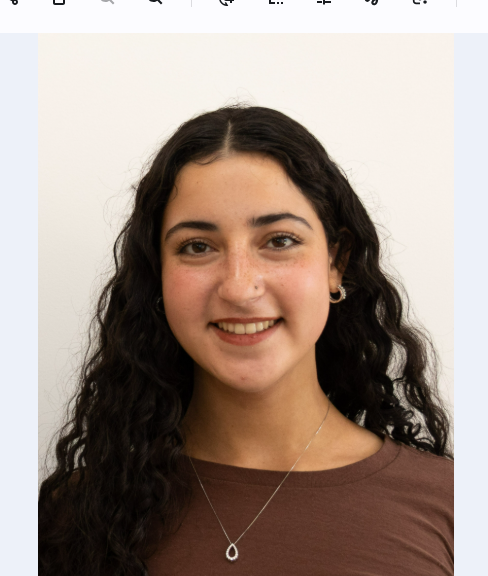









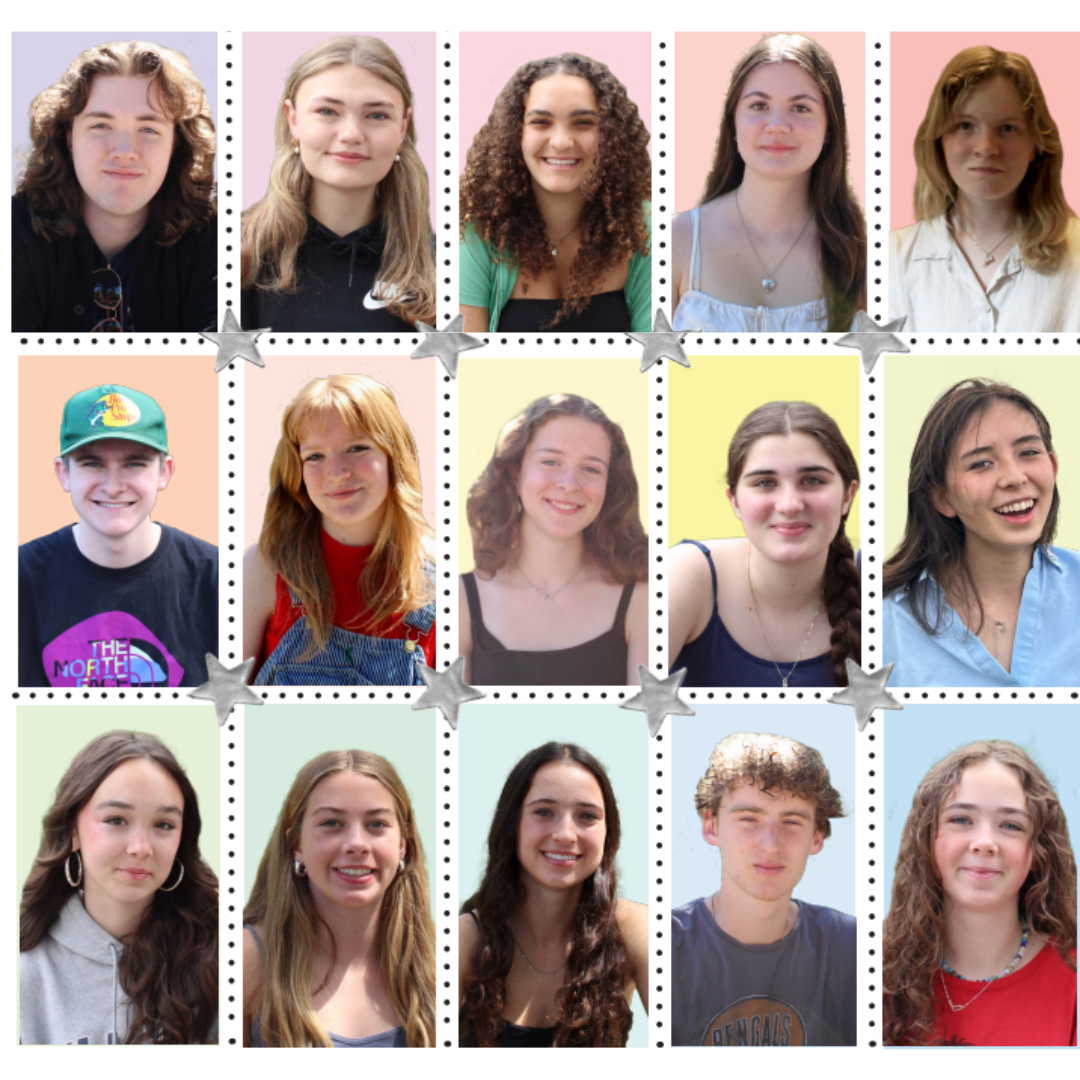





“Our main goals were really to just help women not feel scared going into high school band, because I was really scared going into it, and I know a lot of the girls from whatever middle school, whether it be Tubman or Beaumont, are just intimidated by all the testosterone,” says Zia Doughty, a senior at Grant High School who has spent the last four years participating in Grant’s jazz program as a drummer. During her sophomore year, Doughty co-founded Jazz Changes, an all-female youth jazz camp, with the intention of making jazz more welcoming and accessible to girls entering high school.
The camp has been hosted in May of each year since its start, and, though it’s only one day long, it’s packed with events. Middle school girls who sign up for the camp are taught three to four songs by professional female jazz clinicians. Throughout the day, they learn the music, practice improvisation and, at the end of the day, perform what they learned for their parents. Female-identifying youth of all skill levels are welcome to attend — the songs taught are intended to give the attendees a basis for future jazz performance and more complex concepts they might learn in high school. “The nice thing about jazz is you have all of these songs, and it’s kind of like everyone knows the same songs. So when you go out and you teach these girls some of these standard songs, they’re able to go out and play them … It really was mainly to just help encourage the girls to go out and play more,” says Doughty.
Jazz Changes was partly created in response to ongoing prejudice against women in Grant’s band program. Many female students were coping with being repeatedly overpowered and ignored in sectional meetings, facing belittling criticism and sexist jokes from male peers and constantly needing to perform above their peers to receive recognition. Grant junior Josephine Bourgalt, who plays alto saxophone and is another of the co-founders of Jazz Changes, has had to deal with gender discrepancies in the jazz program. “My freshman year, when we started Jazz Changes, the whole saxophone section was boys, and being a freshman girl in it, I was definitely the person with the least power in the whole section. And they definitely treated me like that,” she says. “There were multiple occasions of just all of them ganging up on me at once, which was really not fun.”
Many other women cited similar experiences. “I feel like it’s definitely tricky to feel like you’re doing good or that you’re as good as the rest of them, because their voices are always very loud,” says senior pianist Sarah Graff, another co-founder of Jazz Changes.
In February 2024, multiple female jazz players began speaking to one another about their experiences. “We were all texting,” says Bourgault. “We’re sending each other these screenshots, and we’re like, ‘Oh my God, this is happening to all of us.’ And so we all sat down, and we’re like, ‘What are we gonna do about it?’” The team decided to reach out to band director Christopher McCurdy. Bourgault says he was “very receptive.” Mc- Curdy allowed them to skip practice that evening so he could confront the male students in the class. “Some of the guys at our school in the jazz program were upset about it — (not) upset about the camp necessarily, but upset that we had the conversation with our band director in the first place. They saw it as kind of like a snitching thing. And it really, truly, wasn’t that,” says Doughty.
After having the conversation with McCurdy, Grant alumna and bass player Megan Cavalucci pondered if the camps she had helped run for girls in robotics could be applied to jazz as well. “We were like, ‘Oh, my God, that’s awesome. We totally want to do that,’” Bourgault says. “And so then we all just started working really hard to put it together.” Though the students took on the administrative roles, McCurdy helped them get in contact with the female clinicians who helped teach the camp. In order to attract middle school girls to the camp, the team spent three days visiting various Portland Public Schools (PPS) middle schools so that they could pitch the camp to their bands. They furthered their outreach through emails and Instagram. Leading up to the camp, the team planned agendas, organized payment for the clinicians and honed their main focuses: learning jazz standards, improvisation, reading music, chord changes and the idea of “taking up space” as women in jazz — their unofficial motto.
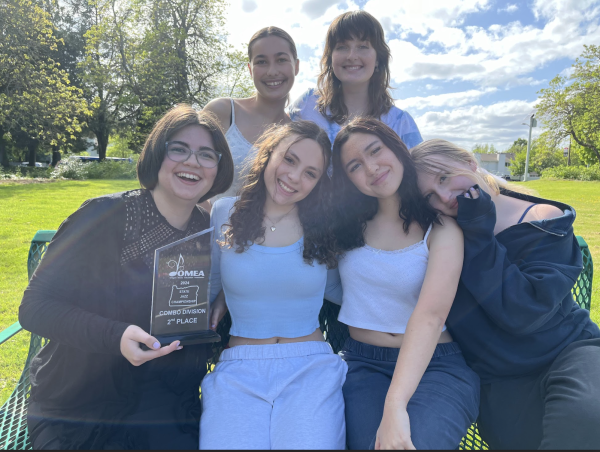
Since its launch, Jazz Changes has seen substantial growth. “The first year we did it, we only had about 12 girls come, which was still a very great amount, considering everything. This year, we had close to 30,” says Doughty. “I think it was a very big improvement. And I think the main thing was that we were kind of just more annoying about it, like we sent a lot more emails and we visited a lot more schools.” In addition to helping set up the annual camp, McCurdy encouraged the team to play in a combo, or a small ensemble, in their first year. The Jazz Changes combo attended the Mount Hood Community College Jazz Festival and placed second in the jazz combo category of the state competition. “It just further emphasized this message that anything all these guys can do, we can do just as well, if not better,” says Bourgault. The combo has since played at jam sessions, gigs and competitions to showcase their talent and continue empowering women in jazz.
Jessika Smith, a local saxophone player who worked as a clinician for Jazz Changes’ day camp both years it has been held, feels grateful that the team has provided a place for young women to explore and enjoy jazz together. “It has been so fun to teach at this camp, and to see the younger students stepping up and being brave and creating music together,” says Smith. “I don’t get many opportunities to be in a room with all (female-identifying) people, and it just feels good. No one feels like they don’t belong because we’re all there, and we look similar and speak similar and generally just vibe together.”
After running the camp for two years, the team has seen its impact in real time. Many of the girls who attended the past two camps have joined Grant’s band program and held on to student-mentor relationships with the leaders of Jazz Changes. “When they come into Grant, they already know some upperclassmen — now I know a lot of the freshmen, just because they were at the camp and they talked to me comfortably,” says Doughty.
Rhodes Casebeer and Lois Gilsdorf are two sophomores at Grant who attended the original Jazz Changes camp in 2024. They initially met at the camp, but developed a closer friendship through a shared class in their freshman year. When it came time to enter high school and join the band program, Casebeer and Gilsdorf felt prepared, already having mastered a few jazz standards and improvisation basics. “I definitely learned improvisation and soloing, (and) how to, as they say, take up space. That’s a big motto for Jazz Changes. It’s learning how to take up space, whether that’s just you in the space that you’re in, or you’re soloing, or you’re playing. And I definitely learned, like, it’s okay to just play what I want,” Gilsdorf says. “I don’t have to think too hard about what it is that I want to say with how I’m playing.”At the end of their 2025 session, Doughty encouraged the pair to join the team and help with the recruitment process for their next camp in spring 2026. To Casebeer, being valued equally as every other team member as an underclassman was particularly meaningful. “As we started having meetings of planning and recruiting and all that stuff, whenever I would want to have some input, everyone would take me seriously,” says Casebeer. “And it just kind of helped me with (the idea that) just because I’m younger doesn’t mean that I am not going to be listened to as much.”
Building a welcoming space where younger girls can comfortably learn and build student-mentor relationships — a necessary break from the masculinity of typical band programs — has been the goal since its inception. Thanks to this, Jazz Changes has proved to have a meaningful impact on Grant’s jazz program as a whole. “It’s pretty uplifting to anyone who’s feeling out of place in the jazz community,” says Graff. “Just getting to play with other girls is a really cool experience.”
This year, the team is hopeful to expand Jazz Changes’ outreach and recognition — and they have myriad ideas, including busking as a combo more often, meeting during school hours, planning community events, helping girls with their sectionals and extending their recruiting to more PPS middle schools. However, despite the success of Jazz Changes, misogyny in Grant’s band program is still evident. “The issue definitely isn’t solved yet,” says Bourgault. “It’s definitely still very much a presence, like in our day-to-day lives, in band, it still very much happens … And it still needs to be brought to people’s attention.”