
















Most people, at some point in their lives, will find themselves in a situation where they are unable to communicate effectively with someone — when language barriers or significant cultural differences lead to misunderstanding. This is a daily occurrence for people who are Deaf. In addition to the physical limitation of not being able to hear, a history of oppression and modern cultural biases make it difficult for Deaf people to exist in the hearing world. It is, however, possible to change this reality, although it would require effort from both hearing and Deaf individuals to bridge communication barriers and cultural gaps in pursuit of a more unified society. One of the most effective ways for hearing people in the U.S. to contribute to this struggle is to learn American Sign Language (ASL).
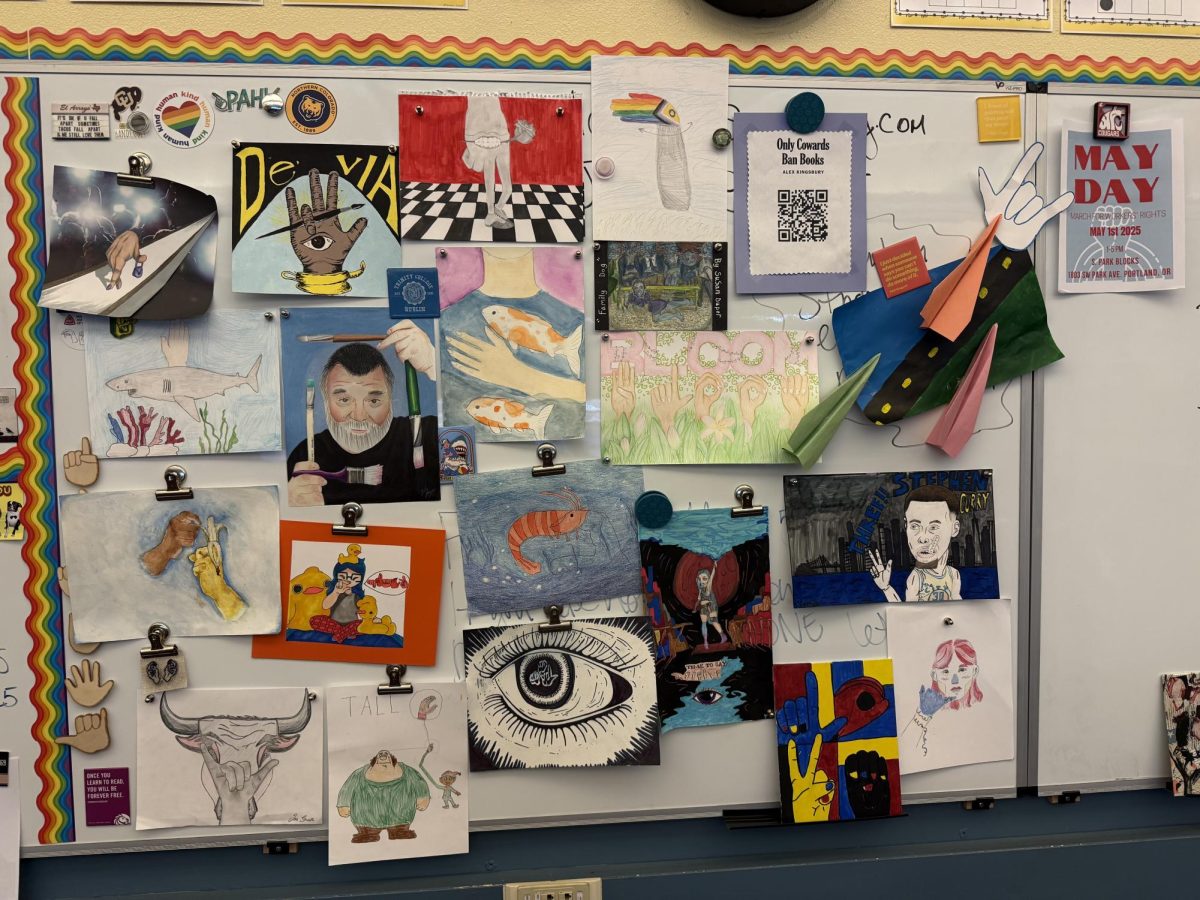
ASL is a historically marginalized language: Until recent years, people interested in learning it would be met with difficulty. However, today, thanks to the efforts of the Deaf community to create these resources, students across districts, including Portland Public Schools, have the opportunity to learn ASL. Grant High School has offered ASL as one of its world language courses since 2022.
In the past, Grant has only offered two years, or “levels,” of ASL classes: ASL 1-2 and ASL 3-4. This year, a third level will become available for students to take: ASL 5-6. Not only is this class another way for students involved in the ASL program to continue and challenge their learning beyond what was previously offered — it is also indicative of the current trends regarding the representation and teaching of ASL in mainstream, hearing schools, as well as the growing awareness and acceptance of the Deaf community.
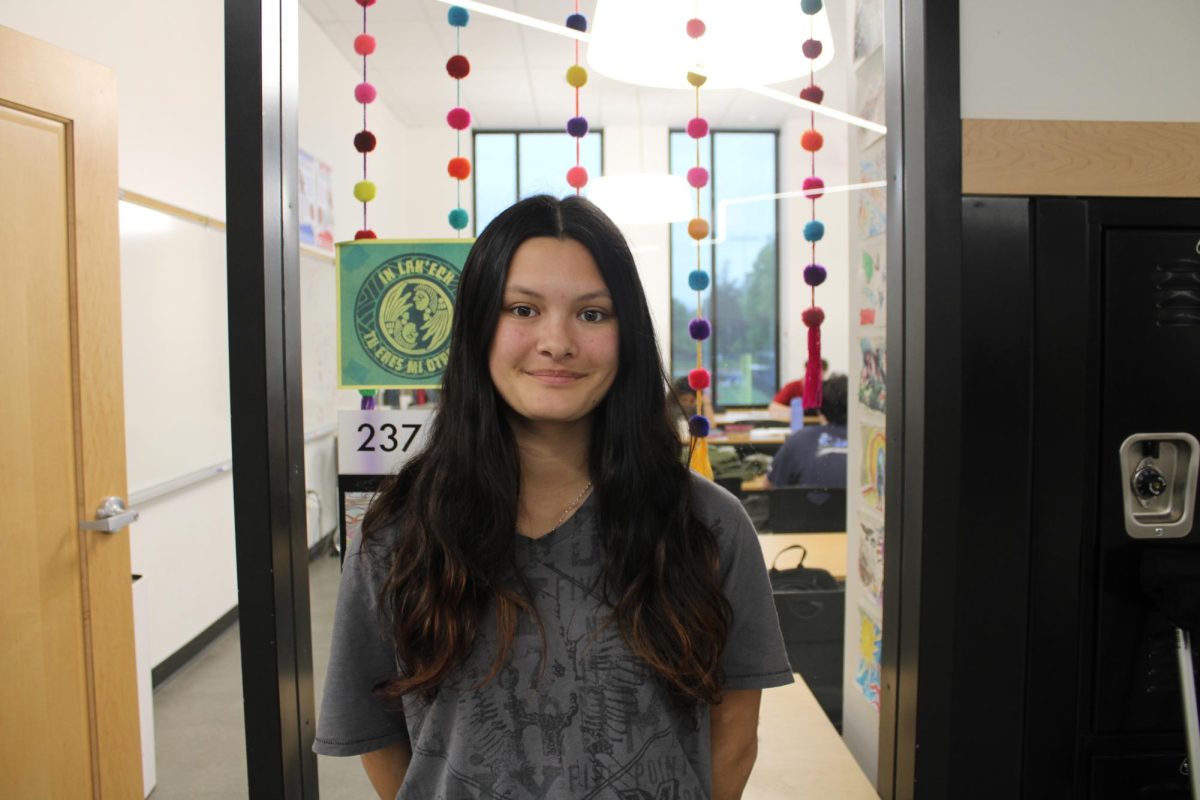
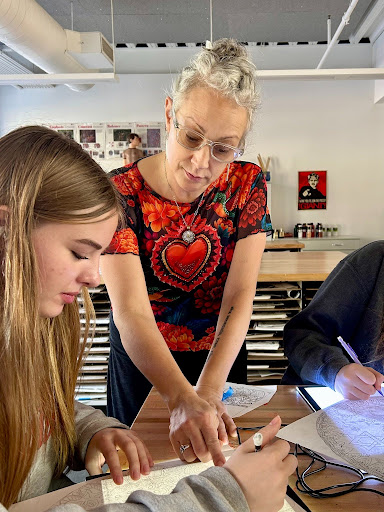
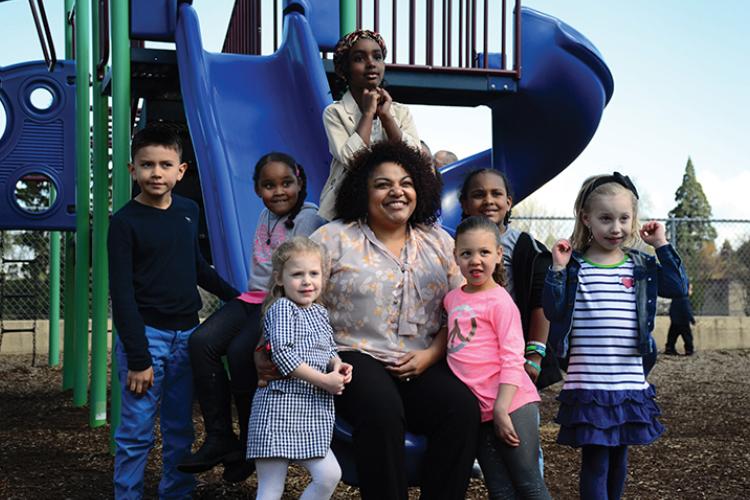
This new level of ASL will be taught by Jennifer Loebs — the only ASL teacher at Grant. “I’m excited for it,” she says.
According to Loebs, ASL 5-6 will have a few key differences when compared to its precursory courses. She says that third-year students in the program will be silent “100 % of the time” during class — a common rule many ASL classrooms instate to provide an immersive experience and foster culturally-appropriate behavior. Additionally, 5-6 students may take a field trip, likely to Washington School for the Deaf. Since this is the first year ASL 5-6 has been offered at Grant, and Loebs’ first time teaching a third year of the program, some minor changes to the structure of the course will likely take place. “They’ll be my guinea pig class,” Loebs says.
She also intends to leverage her unique position as the sole teacher of Grant’s ASL program to teach in a more effective manner by building off preexisting bonds with her students. Since she has the same students for multiple years, she says, “I don’t have to establish a new relationship with my students after the first year, so I just get to continue to expand and deepen my relationship with them.”
Loebs believes that the expansion is a result of growing student interest in the program: As more students express interest in the class, or attempt to enroll in it, the course is able to expand and offer more opportunities for the increasing numbers of students. She also says that adding a third year of ASL could further boost student interest in ASL in the future because of the potential to report three years of a language on college applications.
Grant is the third school in the district to add ASL to its options for world language courses, which Loebs says is “pretty cutting-edge” on the national level. Grant is part of a larger, nationwide trend of schools beginning to offer ASL in their language curricula.
ASL, like all languages, is distinct: It has its own syntax, grammatical rules and cultural connotations. “It is not English on the hands. It is not a universal language,” says Loebs. Despite this, it was only formally recognized as a distinct language by academics in the 1960s, thanks to the work of individuals such as William Stokoe, an American linguist whose research on ASL brought new knowledge about the language to people around the world.
Hearing people have not always supported the existence of ASL; historically, suppression of the language was widespread and institutionalized throughout the U.S. Oralism, the practice of instructing Deaf children to lip read and speak, rather than sign, was the favored method of educating Deaf people for most of the country’s history. Total communication, which includes both signing and speaking, wasn’t developed until the ‘60s. Although modern deaf education often focuses more heavily on ASL, parts of the total communication philosophy are still sometimes used.
In addition to the historical flaws in the country’s deaf education system, people who are Deaf must go through the hardship of their disability being overlooked regardless of its many impacts on all aspects of life. Despite the history of oppression of Deaf Americans, the last few decades have seen incredibly positive progress. The acceptance of ASL in the hearing world started off gradual but began accelerating rapidly from the 1980s through the early 2010s. According to a paper from Gallaudet University, from 1987 to 1997, the number of high schools teaching ASL increased by almost 100%. The article also states that the growth rate of high schools teaching ASL was 432% between 1998 and 2002. These values suggest that ASL is rapidly gaining recognition and popularity among hearing people, and, as a result, is finally making its way into the mainstream education system.
This trend is beneficial for both hearing and Deaf people, as more widespread knowledge of ASL allows both groups to communicate more successfully with one another. Loebs says that about 50 students in last year’s graduating class took both courses of ASL offered at Grant, meaning that 50 students can likely have a basic conversation with a deaf person and go out into the world equipped with the knowledge to make it a slightly more inclusive place. Fifty may not seem like many, but it is a start, and with the program’s new expansion, graduating students will have an even deeper knowledge of the language. “I’m growing a whole new generation of people who are learning about a community and a culture and a group of people that most people don’t even bother with,” Loebs says. “My goal, really, is to create allies.”