








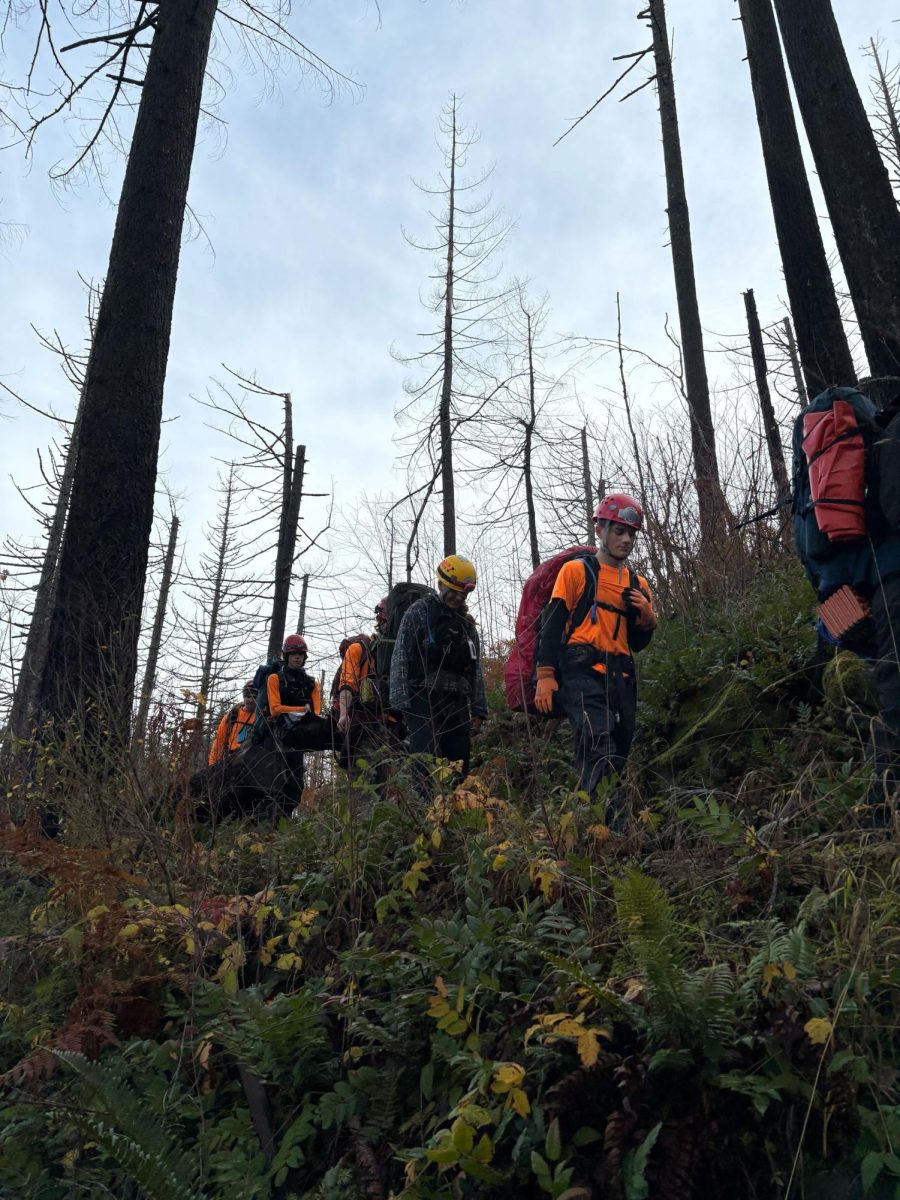
Many students and staff at Grant High School may live their whole lives without encountering a life-threatening situation. Some, however, sign up to face dangers every day. There are over 20 Grant students and faculty who sacrifice their time and energy to volunteer for the Multnomah County Sheriff’s Office Search and Rescue (MCSOSAR), a youth-led organization that works with the Multnomah and Columbia Gorge communities to provide rescue and body retrieval services when needed.
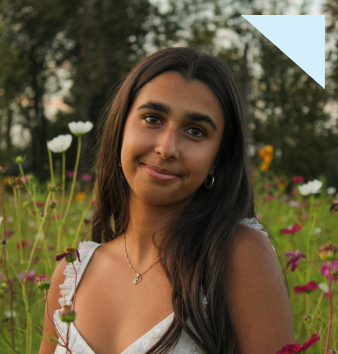
In November 2025, one Grant senior sat down with her family, ready to dig into Thanksgiving dinner, when suddenly an alarm went off: a signal from MCSOSAR, meaning somebody needed their help. The student, Elise Yilmaz, was forced to abandon her dinner and lead her team of volunteers in venturing off-trail and rescuing an injured hiker caught in a landslide.
The hiker had multiple severed fingers and needed to be evacuated so Emergency Medical Services (EMS) could treat him. Because of the severity of his injuries, Yilmaz says that EMS was “doing a lot of the medical (care), and we were responsible for extracting him from the field.” Led by Yilmaz, the team was able to locate and transport the victim to safety, despite him being far from the trail and stuck in an area that was hard to access.
Without warning, Search and Rescue (SAR) volunteers can be called at any moment to spend hours searching miles of treacherous landscape.
MCSOSAR was founded in 1944 as a Scouting America —formerly Boy Scouts of America— explorer post with no official ties to any SAR groups. In 1960, the group had an opportunity to participate in a search for a missing boy on Mount Hood. The group decided to shift its focus to SAR activities permanently after this search, finding that SAR was “way more fun than Boy Scouts,” says Yilmaz. In the early 2000s, MCSOSAR officially cut ties with Scouting America and became directly affiliated with the Multnomah County Sheriff’s Office. As of today, they’ve carried out over 1500 searches, rescues and evidence recovery missions and helped train thousands of youth to assist those in need.
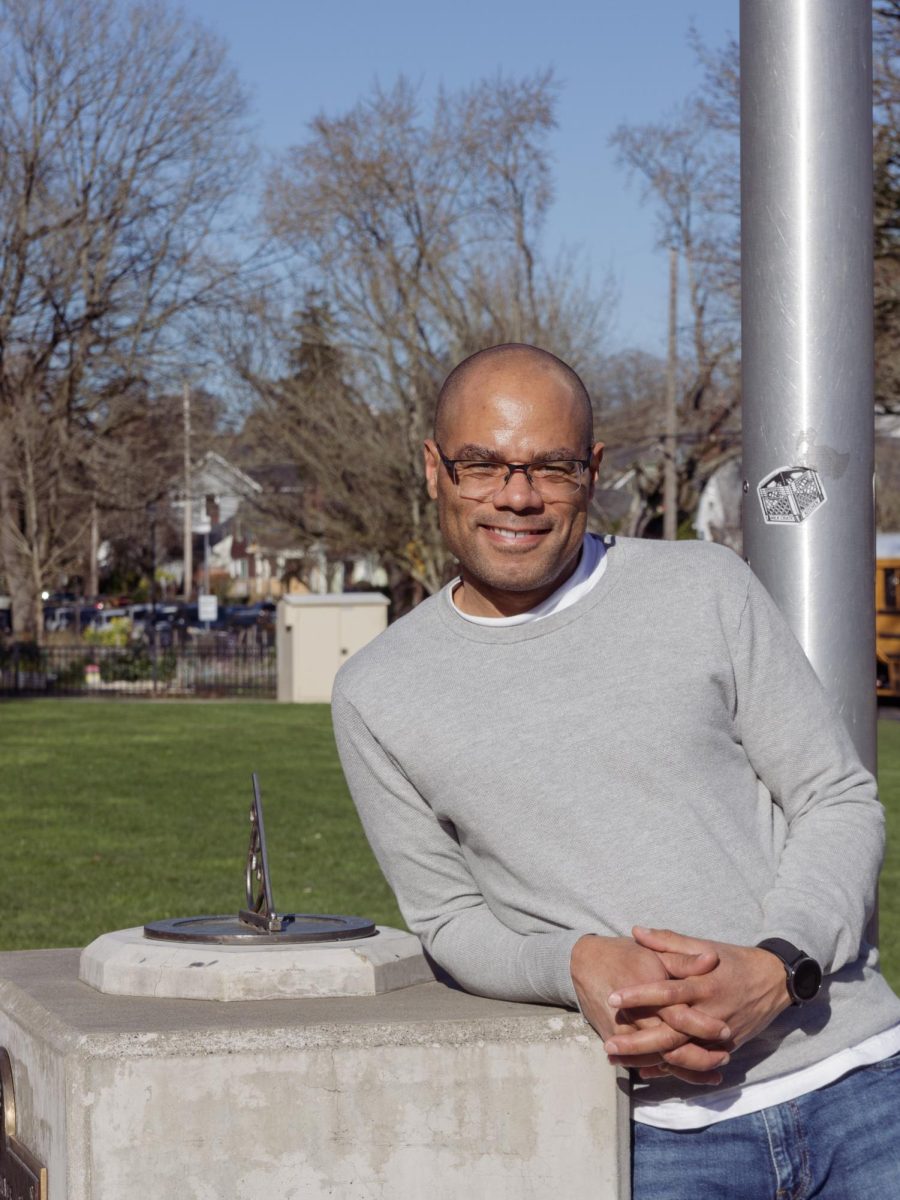
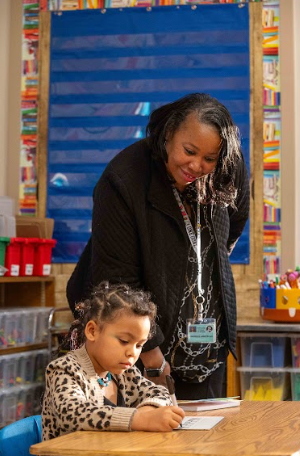
Dylan Leeman, a long-time English, creative writing and AVID teacher at Grant, is the lead training adviser for MCSOSAR. “I always wanted to be a rescuer,” he says. He served in the army and had a strong interest in joining the Navy or being a Coast Guard rescue diver during his time there. Although neither option worked out, he left the army equipped with first aid, navigation and radio skills well-suited for rescuing. His only issue was finding a functional group to join. In 2017, after a student gave a presentation on MCSOSAR to his class, Leeman decided to join the organization alongside his daughter, who was a freshman at Grant at the time.
Despite his extensive outdoor experience due to his military training and time with the Boy Scouts, he was treated just like any other recruit and was required to complete two years of training before he was permitted to become an advisor. “I had to prove myself. I had to hike 17 miles all night long. I had to do everything everybody else had to do,” says Leeman.
Compared to most SAR programs in the Pacific Northwest, MCSOSAR is unique because of its emphasis on youth leadership and development. “What I love about this youth group is it enables me to pair my love of working with and mentoring young people with the search and rescue work,” says Leeman. Because MCSOSAR is so focused on these skills, it allows high school students the opportunity to hone their leadership through real-life, impactful scenarios. Both Yilmaz and Grant senior Lillian Fawell can now confidently lead their teams of up to 18 volunteers through life or death situations thanks to the extensive training and support received from mentors such as Leeman.
Yilmaz and Fawell both began their training in their freshman year, in which they endured intense physical and mental training to prepare for “call-outs,” which are missions spanning from urban searches to hours long body recoveries. Recruits must prove their proficiency in crucial skills like first aid, navigation and communication via radios, often spending an entire year studying to pass the program’s rigorous tests.
One of the most grueling training exercises first-year volunteers must undergo are outdoor field tests, in which participants must hike all night along rugged terrain to simulate a search. There is an outing each month to hone different skills, with the one in March notoriously being the most difficult. The trip is “affectionately called ‘Embrace the Suck,’” and it’s “where they push you to your breaking point,” says Fawell.
Yilmaz recalls one training task during this trip that involved hiking late into the night: “We were on this steep incline, and I kept tripping and rolling my ankle, but we persevered,” she says. Fawell and Yilmaz persisted through the trip together and remember looking at each other and crying, feeling defeated as they trekked on. Eventually, the pair made it to the mock victim and were able to rest before hiking out the next morning.
Fortunately for volunteers, trainings are intended to be more difficult than a typical search, allowing participants to be fully prepared, both mentally and physically, for call-outs. But the trainees can’t be prepared for everything; one of the most depressing aspects of the work is recovering deceased hikers’ bodies. Although these missions tend to be less physically demanding, Fawell says that they are almost always more mentally taxing. “It’s not as much of a happy ending. Obviously there’s an aspect (that) you’re returning this person to their family, and it’s obviously for the better … but it’s still difficult,” she says. On some missions, searchers will not know if the person they’re looking for is dead or alive. Fawell says that despite the sheriff office’s attempts to warn them ahead of time, “sometimes you just don’t know what you’re going to come across.”
Due to the morbid aspect of some of their searches, extensive precautions are taken by the sheriff’s office to ensure that volunteers’ mental health is prioritized. They have access to therapists specifically trained to help people who have undergone potentially traumatizing missions, but Yilmaz says that compartmentalizing is a part of the job. “You have to separate what happened … with your day-to-day life,” she says.
Despite the incredible amount of sacrifice and energy volunteers give, SAR does not receive much recognition. “A lot of the times, you just have to know that you are making a difference,” says Yilmaz. “Even if it’s not on the community, it’s for yourself too,” she says. Yilmaz and Fawell agree that the program has been incredibly helpful to them in building their confidence, especially as young women. They encourage anyone interested to sign up in October. “It’s definitely not something a vast majority of high schoolers have the opportunity to do, and I think that it definitely changes you for the better,” Yilmaz says.