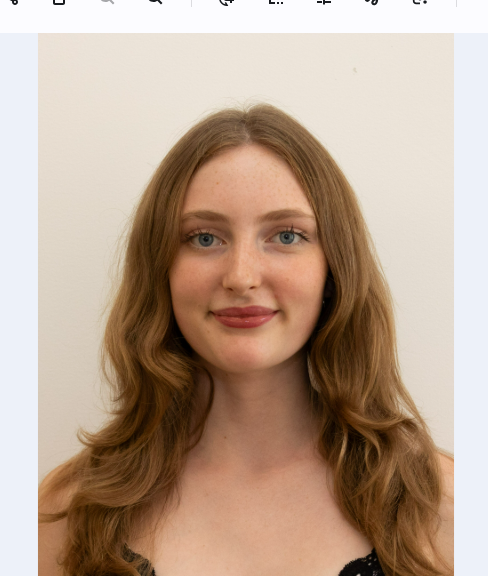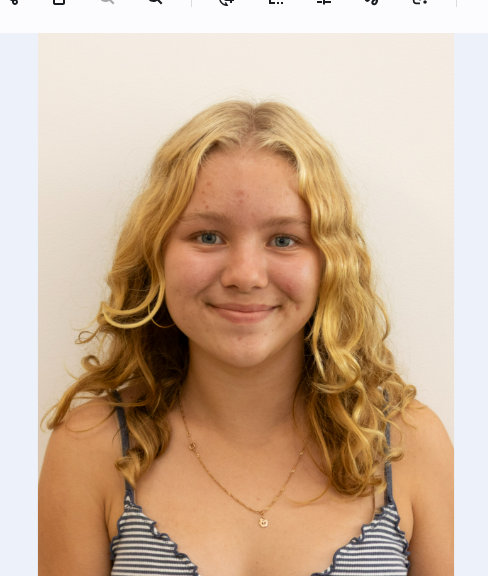

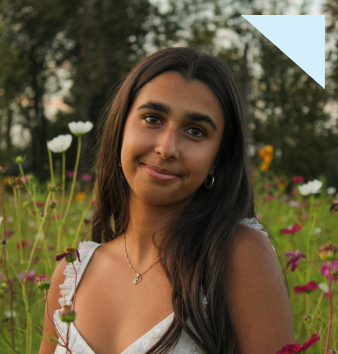










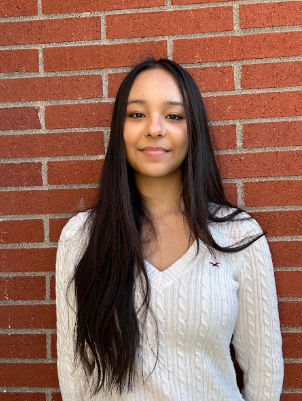
For Cristina Culi, a sophomore at Grant with a multicultural background, heritage is more than a title. Culi’s mother, Beate Ioanide-Culi, is from Romania; her family relocated to the U.S. in part to escape religious persecution under the communist government. Culi says that the communist regime heavily impacted her family’s life in Romania: “They only had, I think, two TV channels, and it was all propaganda,” she says. Her family was also afraid to go to church. “They could not show any religious beliefs because that would be against the government,” Culi says.
Communism in Romania was a factor in her family’s decision to move, but their primary motivation stemmed from Culi’s great-grandfather, Costache Ioanid. He was a famous poet who wanted to publish a book containing a collection of Christian poems, but could not safely do so in Romania. Ioanid moved to the U.S. before the rest of the family in 1983, though they followed him shortly after.
Their journey to the U.S. was not an easy one. The Culi family first flew to Rome, where they took an English class. Shortly after, they flew from Rome to the U.S.
The English lessons were particularly challenging as many immigrants from different cultural and linguistic backgrounds were combined into a single English language curriculum. Culi says the class was barely helpful and that her mom “basically learned English from watching TV.”
The family faced multiple difficulties aside from the language barrier while integrating to the culture of the U.S. Culi says that her family had trouble fitting in, especially with clothing. “They didn’t know any of the fashion trends or how to buy the right clothes,” she says. “They got made fun of a lot.”
Despite these difficulties, her mother has made a home for herself in the U.S. and now runs an architecture business. “Now, we’ve found our place,” Culi says. “We figured out how to fit in here.”
Although she has never lived there herself, Romanian culture remains a part of Culi’s life. She often eats cabbage rolls called sarmale, which are the country’s national food, and visits Portland’s yearly Romanian festival. Plus, her Romanian-speaking mother and grandmother frequently expose her to the language. Culi visited Romania when she was a young child, and says she would like to return.“I have no idea what it looks like where they grew up, and so I would like to see that,” she says.
Culi says that her mother’s heritage has had a positive impact on her life, since it gives her “access to these cultures from so far away.” That pride causes her to question the impact of current immigration enforcement in the U.S. “America is literally based off of immigrants,” she says. “I feel like it’s absolutely unfair trying to take out such a core part of the country.”
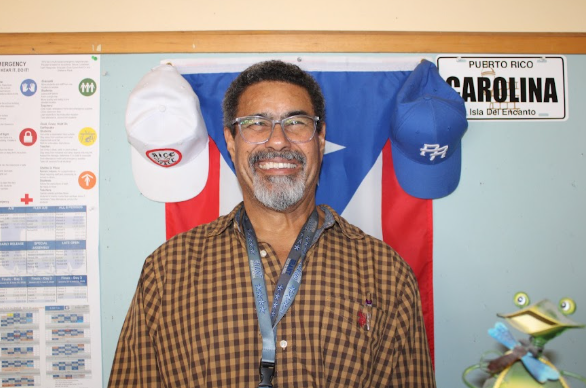
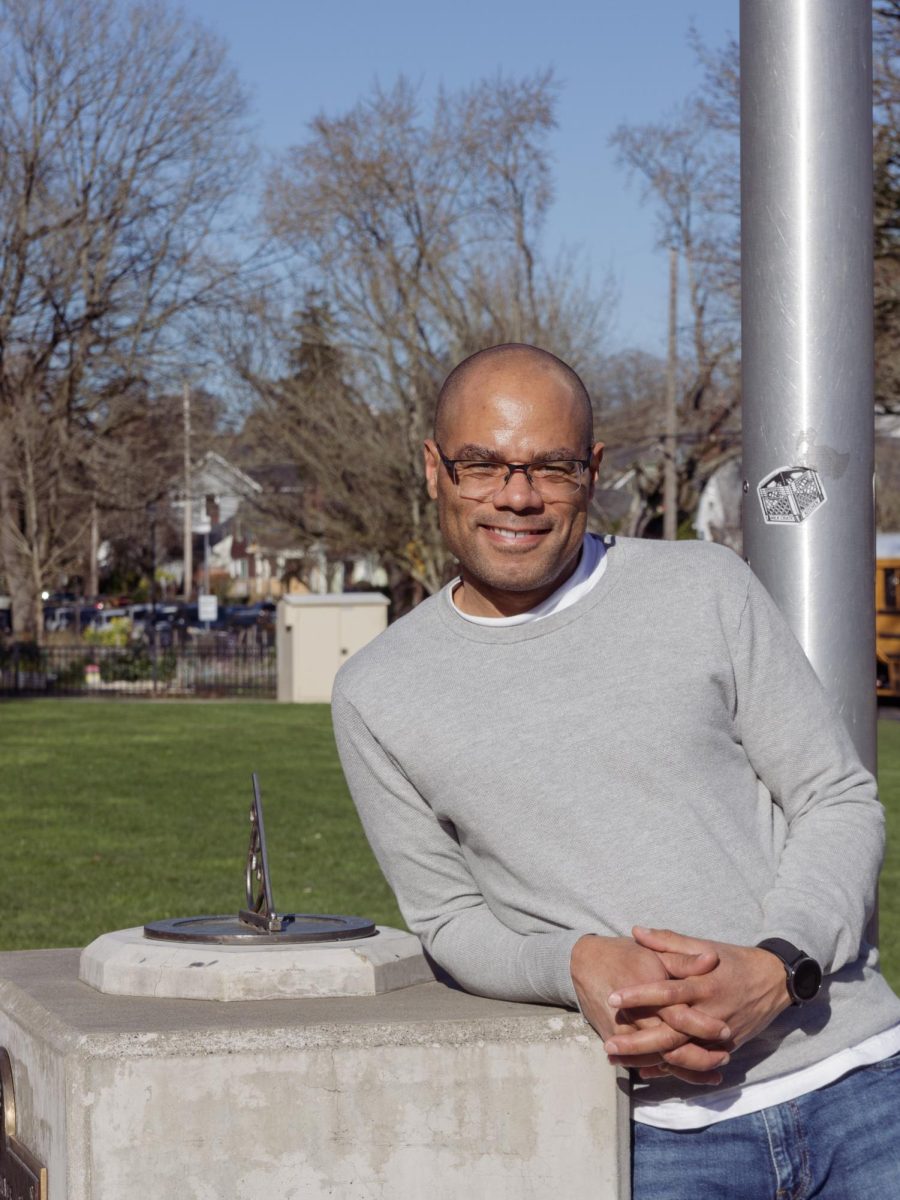
Canales Reyes’ life has been shaped by his
world travels, but he commemorates his
birthplace — Puerto Rico — in his class-
room. (Irma Anderson)
Andres Canales Reyes has taught in Portland Public Schools for 15 years and is currently in his seventh year of teaching Spanish at Grant High School. Canales Reyes was born in Puerto Rico, and was drafted into the military in 1973, at 17 years old, to fight in the Vietnam War. “One day I went … to get my physical. And the next day, I was in a bus going to the airport,” he says. After basic training in South Carolina, Canales Reyes was sent to Vietnam.
Although joining the military wasn’t his choice, his love for international travel led him to remain in service for many years. After serving in Vietnam, Canales Reyes traveled all over the world through his assignments, exploring Germany, Egypt, Turkey and Korea, along with postings in Massachusetts and North Carolina. His travels impacted his personal life as well: “In North Carolina, I met my wife,” he says.
After Canales Reyes left the military, he and his family moved to a small town in the UK, working for an accounting firm. England was a favorite among the countries he lived in due to its relaxed, communal and accepting environment. Canales Reyes describes the country’s pub culture as “like having an afternoon with your friends.” Eventually, Canales Reyes decided to move to Oregon in order to spend time with his granddaughter.
Canales Reyes’ life has always been filled with travel and exploration. He says his experiences have encouraged him to be “always open to learn.” He recommends others to follow a similar path: “Go travel. Go see the world,” he says.
As someone who has lived in multiple countries throughout his life, Canales Reyes has a strong opinion on the current Immigration Customs Enforcement (ICE) raids in the U.S. “The people in power … are cowards not to do the right things,” he says. “The beauty of the United States is that the Constitution says everybody is equal, even though some people think, ‘Well, I’m blond and I’m better than you.’ No, you’re equal to me.”
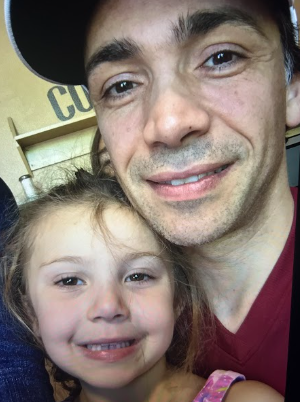
sophomore Maya
Chehab (left)’s fa-
ther, Fadi Chehab
(right), immigrated
to the U.S. from Leb-
anon in the 1980s. (Courtesy of Maya Chehab)
Maya Chehab is a Grant sophomore of Lebanese heritage who has lived in the U.S. her entire life. Her father lived in Beirut, Lebanon, until the late 1980s when he moved to the U.S. to escape the Lebanese Civil War, joining his five older brothers. He lived in Florida for a few months before relocating to Portland and attending Lincoln High School.
Chehab says her father moved in part due to the perception of the U.S. as a place that “has new opportunities and new beginnings.” Now, her father works as a pharmacist manager and is still in frequent contact with his brothers and sisters. Though he has made a home for his family in the U.S., Chehab’s father still preserves ties to his culture in the Middle East: He speaks Arabic with his siblings, although neither Chehab nor her mother speaks the language.
Chehab believes that being Lebanese American has kept her informed on world events. “I’m more aware of things going on in the world because of where my dad’s from,” she says. “It’s definitely made me more open minded.”
Chehab is concerned about the ongoing ICE raids across the country. “When my dad came here, he didn’t have a lot of money, he kind of worked his way up and made a living for himself,” she says. “It’s not fair for other people who are trying to do the same thing and who are good people to get violently arrested.”
Chehab says it’s important to learn about other cultures. “I think it gives you a lot more knowledge, and keeps you humble and level-headed,” she says.