


















In January 2026, for the first time in more than 50 years, the Centers for Disease Control and Prevention (CDC) announced that it was removing several vaccines from the list of recommended childhood immunizations.
The last time a vaccine was removed from this list was in 1972, when smallpox was eradicated and the vaccine was deemed no longer necessary. However, this was not the reason that six vaccines were recently eliminated by the CDC; rather, the decision was made after the organization compared the U.S.’ vaccination requirements to those of other developed countries. The CDC found the U.S. to be an outlier, recommending a higher number of vaccines than typical. Thus, it opted to take a “more focused” approach.
According to the Oregon Health Authority, however, the CDC’s decision did not follow the “established procedure” for changing vaccination recommendations, and may result in greater disease risk for children.
Though the CDC’s recommendations affect vaccine pol-icy and access on the national scale, vaccine requirements for school-age children are decided at the state level, and the process of ensuring that school-age children receive the appropriate vaccinations is carried out by individual school districts.
Letisia Ayala, the health services program manager at Portland Public Schools (PPS), credits school nurses, health assistants and administrative assistants with handling much of the paperwork and documentation over the months-long process of confirming student adherence to vaccination policies. “We (start) in the fall … with reminders and conversations at the school level, like, ‘Hey, make sure the students are up to date,’” she says.
PPS students who are not caught up on the required immunizations have until a certain date each year — typically in mid-February, deemed “Exclusion Day” — to get the vaccines they are missing before they are legally no longer allowed to attend school. In order to ensure that students receive their vaccinations before Exclusion Day, school staff prioritize communication with affected families. “By Feb. 3 or 4, the nurses get a copy of who’s on the exclusion list, and then they’ll start one-on-one outreach to those students,” Ayala says. Part of this outreach includes informing families about some of the resources available to them, such as the Benson Wellness Center at Benson Polytechnic High School and the five Multnomah County Student Health Centers located across the district, which can administer the vaccines.
PPS’ Health Services Department values these centers for their ability to provide clarity about vaccination policy. “Our school-based health centers are really important because they work with the schools already, especially because they’re on site,” she says. “And you don’t need to have insurance. There’s no out-of-pocket costs for families to utilize those and to get that paperwork filled out, so they don’t have to be excluded.”
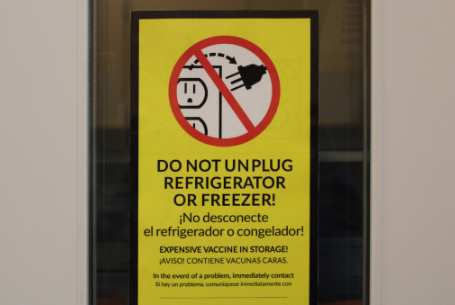
Via these school-based health centers, PPS can expand access to healthcare for families. “There’s fear in the community, there’s cuts in healthcare that are coming that might be … making things a little bit harder to access healthcare,” Ayala says. “This is why PPS really values partnerships in the community and trying to make things easy by having on-site care for students.”
According to Tegan Leipzig, Grant High School’s nurse, recent changes in Oregon law have made it more difficult for families to get non-medical exemptions from vaccination. “You have to watch a module for each vaccine that you want an exemption for, which gives you a lot of education about what you’re declining,” Leipzig says.
Despite this, Oregon faces decreasing immunization rates and a sharp rise in the amount of students seeking non-medical exemptions. The percentage of Oregon kindergarteners with a non-medical exemption from one or more vaccines has risen from 5.3% in the 2020-21 school year to 9.7% in the 2024-25 school year. These trends are particularly concerning when it comes to diseases such as measles, which is making a comeback among children: According to the Johns Hopkins Bloomberg School of Public Health, 2025 saw the most measles cases in the U.S. since it was declared eliminated in 2000. Both in Oregon and nationally, the proportion of kindergarteners who have received the measles, mumps and rubella vaccine has decreased since 2020.
For Ayala, this trend underscores the importance of ensuring herd immunity through continued communication with families in schools. “By notifying the community, we can remind folks about the importance of vaccination,” she says. “Because if you’ve already been vaccinated for measles, then you’re gonna feel safer. You’re gonna feel like, ‘Okay, I’m protected.’”
Oregon is a member of the West Coast Health Alliance, which continues to recommend all 17 vaccines that were previously advised by the CDC, and does not currently foresee a change in insurance coverage for the six vaccines that were recently removed from the recommendation list. However, Leipzig worries that the CDC’s decision will influence people’s attitudes toward vaccination. “If something’s not federally mandated or recommended, I think it creates this narrative that it’s not important or it’s not needed. And there’s also, I’m sure there’s a lot of people that go to the doctor and they just say, ‘Give me what I need. Give me the vaccines I need.’ They’re not going to say, ‘What else you got?’” she says. “They’re just expecting the doctor to give them what’s necessary.”
Ayala shares these worries, especially when it comes to disease prevention within schools. “People who have their own immunity, or are up to date with their vaccines, definitely have a layer of protection that does make it possible to lower the risk of spreading disease in our school communities,” she says. “Speaking for the district, what helps us fight those fears is to have really good communicable disease response protocols in place, so when a student has a disease that’s reportable … the schools can implement that and be able to alert families.”
For Leipzig, the CDC’s decision raises concern about the future spread of preventable diseases — especially in states other than Oregon, which may choose to follow the new recommendations. “(The diseases are) all things that we have under control because we’re vaccinated against them. Removing that precaution, we’re gonna see more instances of these illnesses that we haven’t had to deal with in a long time,” she says. “That’s just really scary and sad.”
Disclaimer: This is a developing story and the facts may change.