














Marlene Gundel — Germany to Grant
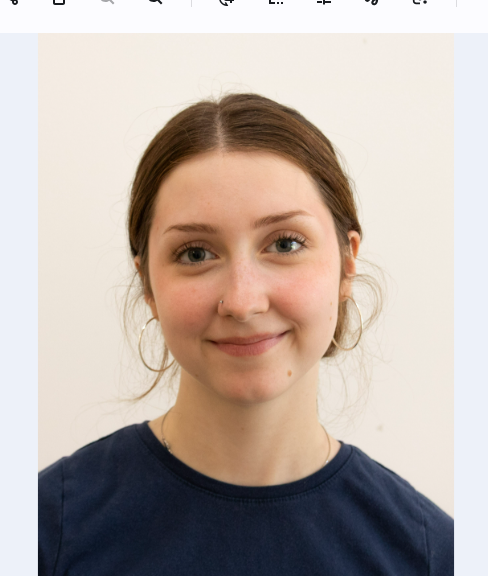
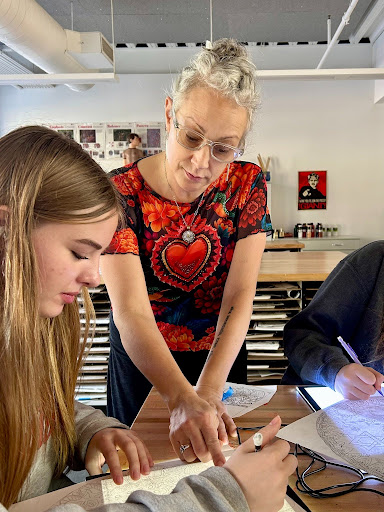
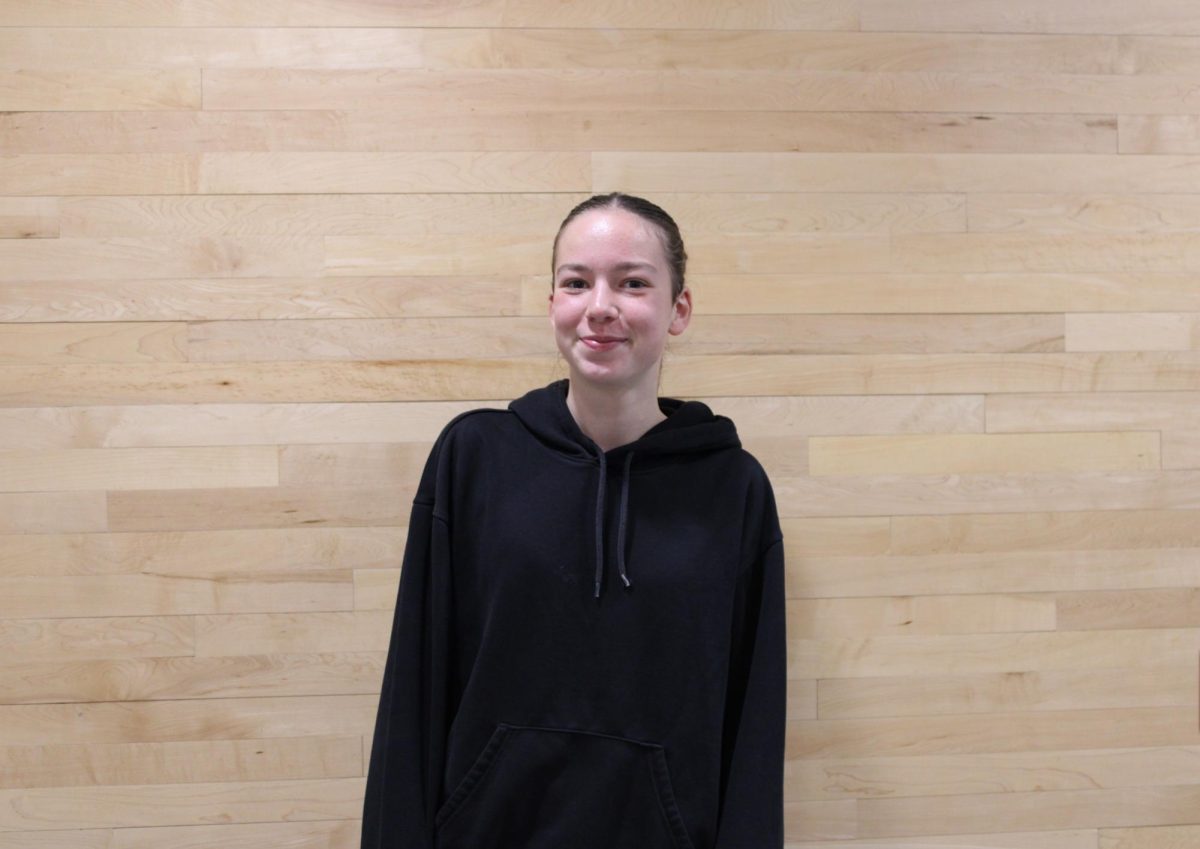
For Marlene Gundel, a 15-year-old from Germany, navigating life as a junior at Grant High School means adjusting to the new food and Portland’s rainy weather.
Gundel is from southern Germany, between Frankfurt and Munich. Although it has been difficult without her family and friends, Gundel is thriving in her new environment.
“I wanted to get to know a new culture and, in general, the life here,” says Gundel. Her decision to embark on this exchange trip was inspired by a similar one her mother took: “My mom did an exchange here and she found lifelong friends, and she’s still in contact with her (host) family.”
One major change she’s noticed when comparing life in Portland to Germany is in her class load. “I have more classes in Germany,” she says. “Here I have eight. I have, in Germany, 13, and the schedule is unregular, not like here.” In addition to her classes, Gundel runs cross country and attends football games with friends — activities not available in German schools, where students can only play sports or instruments through clubs. “The school here is more fun than in Germany,” Gundel says.
Germany’s beautiful architecture, delicious food, avaliablity of weekend trips to Paris and visiting London are parts of her life Gundel misses. Nevertheless, Gundel is having a great experience so far at Grant: “It’s so different from my school in Germany. There are so many more activities, but I really enjoy it,” she says.

Adriana Esquiu Garcia — Spain to Grant
A passion for learning and a craving for a new experience drove Adriana Esquiu Garcia to become an exchange student. Esquiu Garcia, 16, is from Valencia, Spain, and is attending Grant as a senior. Since her start at Grant and in Portland, she has had a great experience at school, enjoying the wide range of electives students can choose from. “In Spain, we don’t have the option to take yoga or walking, or that stuff,” she says.
A large difference Esquiu Garcia has noticed between education in Spain and Portland is that the former is much more challenging, less interactive and less fun. “(There) are not, like, fun electives,” she says. At her school, the only common electives are “French, computers and math,” she says. “It’s really boring.”
Adapting to the social changes of her exchange year has been challenging. However, Esquiu Garcia feels that she’s starting to get the hang of it. “The first month for me, it’s the harder one, but once you start having a routine, it’s easier,” she says.
Though being away from her family has proven to be a struggle, the reward of being in a foreign place is worth it to Esquiu Garcia. The main reasons she decided to become an exchange student in the first place were to “improve my English … to live experience and to become more mature.”
At Grant, Esquiu Garcia is thriving as she makes new friends, gains new knowledge and finds her footing in an unfamiliar city. “There’s a lot of experience that you can have (here) that you cannot have in Spain,” she says.

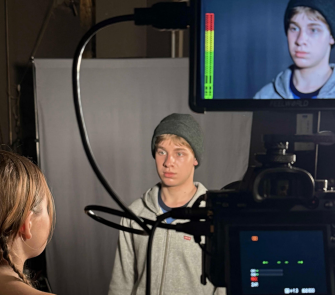
Lyla Powers — Grant to France
Grant senior Lyla Powers spent her junior year in France, and set off on a new chapter of her life. Originally, she searched for a month or semester-long trip, but the only viable option was the Rotary Youth Exchange’s (RYE) year-long program — the application deadline of which happened to fall on the very day she saw it. The program ended up giving her a full-ride scholarship to France, including the plane tickets and meals.
Powers didn’t know any French prior to her trip, and so when she arrived in Paris, she had to find work-arounds for linguistic barriers. “My host family didn’t speak any English, so it was a lot of sign language,” Powers says. As she started to pick up conversational French, they were able to communicate verbally. However, learning the language quickly became the least of her worries.
The RYE has a dual exchange system for some families, and the family Powers had been assigned to for the first part of her exchange was involved because their daughter had gone on a trip previously. “They weren’t physically abusive to me, but maybe to their daughter. They wouldn’t let us eat; we had to sneak out of school to go to the grocery store and buy food and hide it in our suitcase,” Powers says. “They would wake me in the night and be yelling at me in French, and I had no idea what they were saying.” The RYE dismissed Powers’ numerous reports and left her with the same family for three months.
When her mother traveled to Spain nearby for a work conference, her host family completely cut her off. “My host family reported all this stuff about me to my program, saying, ‘Her mom’s gonna come get her and take her away,’” Powers says. Because of these reports, the RYE would not allow Powers to see her mother either. During the school break, her host family took her to various locations, not allowing her to tell her mom where she was.
At home, they put Powers on ‘lockdown’ and went as far as taking her passport away to prevent her from going back to Portland. “I couldn’t leave, except for to go to school. I couldn’t go for a walk around the block,” Powers says. “If I was in my room, the door had to be open … It was so intense, it was so bad.”
When she tried reaching out to teachers at her school, Powers was met with responses like “‘We can’t do anything,’” and “‘Just go home if you don’t like it here.’” It was only when she told her bus driver, who happened to be a part of her second host family, about the situation that she was able to get out. The second family agreed to take her in earlier than usual, giving her a chance to make something better of the trip.
Powers recommends going abroad, just not with the RYE. “This happened to a lot of people … We started with like 30 in our France program, and I think we ended up with like 10,” she says. But despite her poor experience, Powers is glad to have memories from her time in France to look back on positively.
As she traveled to Paris and immersed herself in its culture, Powers learned how to navigate a difficult language and very difficult situation. Highlights of her trip included seeing parts of Europe, partying and staying in hostels with over 50 people from all around the world with no common language. That, at the very least, is something not many people who haven’t gone on an exchange can say they have experienced.
Photos by Sadie Melville and Zoe Shaw