












On Jan. 8, Luis David Nino-Moncada and Yorlenys Betzabeth Zambrano-Contreras were shot and wounded by U.S. Immigration and Customs Enforcement (ICE) in Portland, Oregon. This was the first shooting involving ICE to occur in Portland as of 2026. Concern for the future is undoubtedly present among Portland residents.
Violent ICE incidents are not exclusive to Portland. The country was shaken on Jan. 7 when Renee Nicole Good, a woman in her mid-thirties and a mother of three, was shot and killed by an ICE officer in Minneapolis. On Jan. 24, 37-year-old intensive care unit nurse and Minneapolis resident Alex Pretti was shot and killed by ICE.
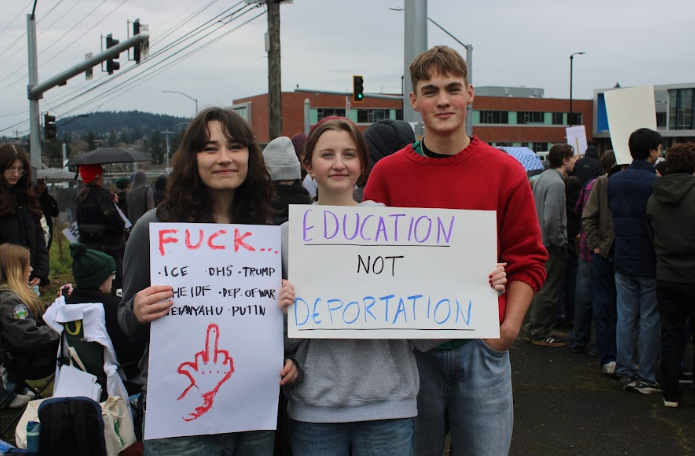
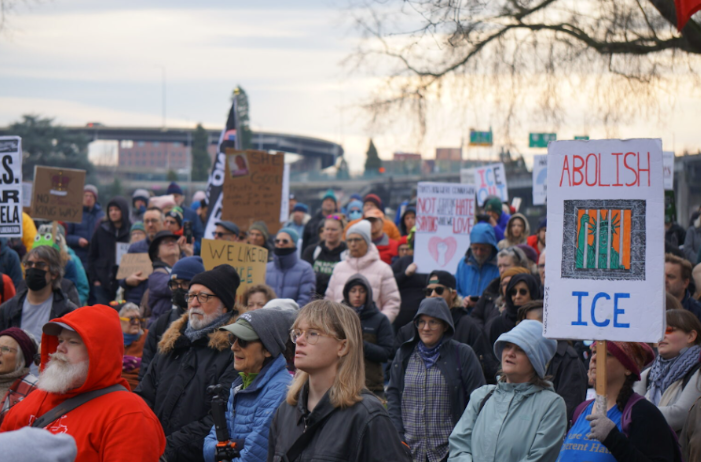
As a result of the upsurge in deaths caused by ICE officers, anti-ICE protests have been taking place across the U.S. In Portland, Oregon over 15 ICE-related protests have already taken place in 2026 so far.
One of the most influential protests that has taken place in Portland, and across the nation, was the No Kings protest on Oct. 18th, 2025. This protest had a turnout of more than 7 million people, with over 2,700 events across all 50 states.
Following the passing of Renee Nicole Good, anti-ICE protests took place in both Portland and Salem on Jan. 10. In Portland, over 200 people gathered at the waterfront of the Willamette River in support.
On Jan 24, in response to the passing of Alex Pretti, protests in downtown Portland occurred two nights in a row. Similar protests will likely take place in Portland and in surrounding areas in the future.
At Grant High School, students are grappling with how ICE impacts their day-to-day lives. Poppy Yue, a student at Grant and at the Oregon Ballet Theatre, shares that she has frequently witnessed protests in downtown Portland. “The ICE building is located down the street from my ballet school … On multiple occasions the protests will grow so much that sometimes my classes are cancelled,” Yue writes. “The protests are peaceful, spirited, and non-violent, but can be very loud and will often require someone to drive slowly.”
An anonymous Grant student shares how ICE has impacted their family. “My family is Hispanic … but with the recent racial profiling … even speaking Spanish, which my family does fluently, is a problem,” writes the student. Additionally, another anonymous Grant student shares their own fear of ICE racial profiling. “I feel unsafe just walking to school … I just have to tell myself that this is going to stop,” the student writes.
There are countless opportunities for members of the Grant community to contribute to the anti-ICE movement, including contacting Congress to convince representatives to defund ICE and informing the community on current events and future protesting opportunities.
Additionally, people can donate to organizations such as the Portland Immigrant Rights Coalition, and educate themselves and others about their rights by distributing “Know Your Rights” cards. These efforts only cover the surface of how people can help combat ICE, so people who are curious about the subject are encouraged to conduct their own additional research.