











AP Studio Art

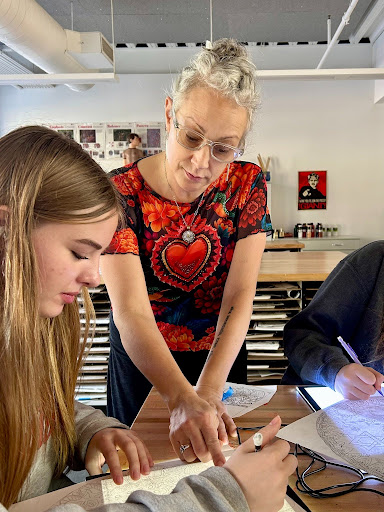
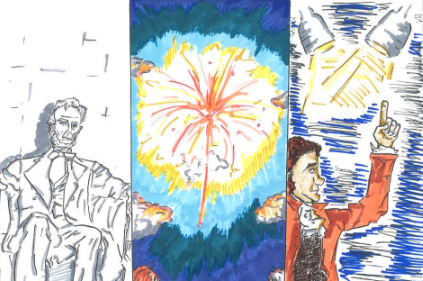
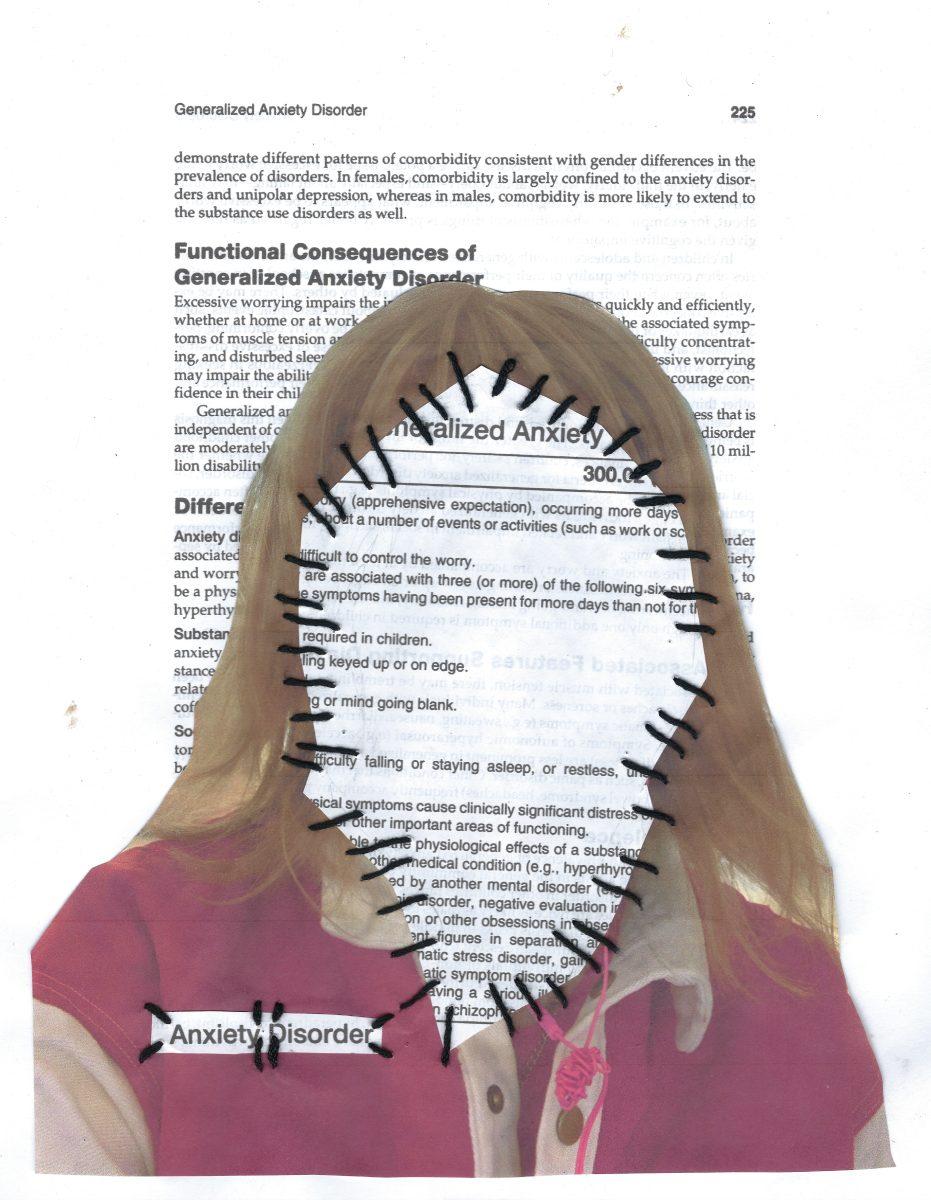
AP Studio Art is an application-based art class that allows students to create a portfolio of work based around a specific focus. The continuous investigation around a topic provides students with a year-long exploration of their guiding question. Jamin London-Tinsel, Grant High School’s AP Studio Art teacher, says, “I tell students, with each piece you make, think about that question, and a new question is arising … So that each piece feels somewhat cohesive and unified, but that you’re also showing growth, transformation (and) experimentation throughout.” London-Tinsel teaches the class with both structure and freedom for students — it includes monthly critiques and frequent meetings with students to talk about their portfolio’s progress. She says that focused and serious art students are best suited for AP Studio Art. “It’s definitely not for everybody,” she says, “but I do think it is a real journey. I feel like students, especially if they choose topics that are personal or important to them, they’re working through their stuff in art-making, and I think that that can really be powerful.”
AP European History
AP European History is an in-depth history class that covers material from the 15th century to 2001.  Students in this class read from a textbook to learn material and complete content-based projects to apply their knowledge. Andee Short, the AP European History teacher at Grant, says that an enjoyment of history is important for those taking the class, but its curriculum can satisfy a multitude of interests. “There’s something for everybody. If you like art history, there’s something for you. If you like religious history, if you like intellectual history and philosophy, we get into all of that,” she says. In class, students analyze primary sources, make timelines and respond to practice essay questions for the AP exam. Short says that in order to succeed in the class, students should be prepared to do work outside of class. “If you’re interested in taking … a history course in college, this is a good but mild example of what that’s like,” she says. Short also says that AP European History’s curriculum is relevant to current events and can broaden students’ worldview. “I think that it’s a really good way to understand why our world is the way (it is),” she says.
AP Seminar
AP Seminar is a research-based class in which students analyze sources from the perspective of the African diaspora. Grant junior Cas Green says that class time is often spent looking at events from the viewpoint of notable Black people. “There’s no real specific thing that we focus on, just trying to focus on it from a Black point of view,” Green says.  Students generally have one assignment per class period, although sometimes they are tasked with larger presentations that go towards the AP Capstone Project. Green notes that the most important skill in the class is the ability to pull and analyze quotes. “It’s mostly synthesizing information, taking a bunch of information, condensing it down,” he says. “It’s a good, chill class to … get the research skills that you need.”
AP English Literature and Composition
AP English Literature and Composition (AP Lit) is an advanced English class in which students read, analyze, discuss and write about different forms of literature. Hannah Fisher, the AP Lit teacher at Grant, says that a large focus of the class is literary analysis and on-demand writing. She also highlights the importance of revision to improve student writing.  “Students need a lot of feedback on their writing to be able to articulate complex analysis in clear writing, so I encourage students to discuss with me regularly. I try to build opportunities for this kind of conferencing regularly,” says Fisher. She explains that this class will appeal to students who wish for a faster-paced and more difficult English class. “Even if you’re not planning to be an English major, being able to clearly articulate complex thinking in writing is crucial in most college contexts. This class can help you work on this skill with more routine practice and challenge,” she says. Despite the challenging nature of the class, Fisher works to make it accessible for students. “We definitely read some ‘classics,’ but I make a concerted effort to keep the content of the class feeling fresh,” she says.
AP English Language and Composition
AP English Language and Composition is a structured English class that focuses on reading and writ-
ing comprehension.  Throughout the course, students practice grammar, work on vocabulary assignments, write from prompts and read books in and out of class. Grant senior Maya Otsuka says, “The most important thing with lang and comp is reading and being able to write based off of that.” She also em-phasizes the importance of using class time efficiently. “I’ll say 90% is classwork and there’s occasional assignments that you have to do outside,” she says. Otsuka decided to take the class to improve her writing, as it builds up students’ skills without requiring much prior knowledge.
AP Spanish Language and Culture
AP Spanish Language and Culture is an advanced Spanish class that focuses on writing, reading, speaking and comprehending the language. The class, which is taught entirely in Spanish, combines
both the conversational elements focused on in Spanish 5-6 and the grammar skills that are learned in Spanish 7-8. 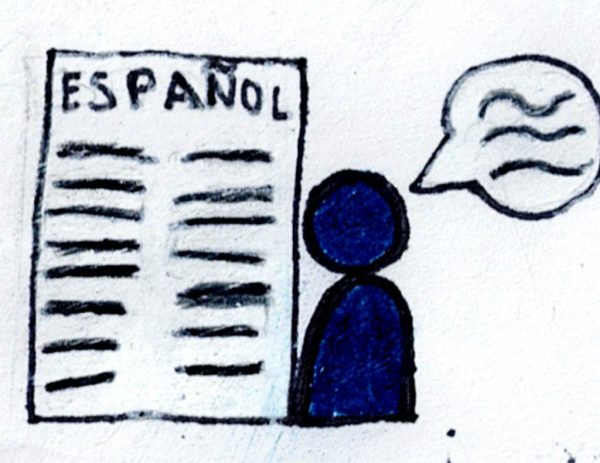 Nelson Perez, the AP Spanish teacher at Grant, believes the class is both rigorous and engaging for students. “In every single class we do dialogues, we read the textbook, we answer questions related to what we’ve read … The class is intense. The class is academic. The class is fun, and the students learn a lot,” he says. Although the course covers a lot of material, Perez’s teaching style makes it as stress-free as possible. “My intention is teaching the class academically and giving the students the space that they need to understand the amount of new content that they are exposed (to) every single day,” he says. Perez encourages students who are motivated to learn Spanish to talk to him about taking the
class, even if they haven’t taken Spanish 7-8.
AP Japanese Language and Culture
AP Japanese Language and Culture combines comprehension of the language through reading, writing, speaking and listening with building an understanding of Japanese culture. Students who are enrolled in the Japanese Immersion Program (JMP) take AP Japanese during their sophomore year, while non-immersion students take AP Japanese in their fourth year of learning the language.
Grant’s Japanese program is based on a proficiency system that aligns JMP sophomores and non-immersion fourth-year students with an “advanced low” level of comprehension.  Kayoko Akin, the AP Japanese teacher at Grant, uses class time to assist students and work on practice problems for the AP Japanese exam. “Language … you can’t get it in one night,” she says. “Almost every single class we read, (d0) practice questions … and then I provide all useful tips and strategies to be successful on the AP Japanese exam.” She also highlights the diversity of AP Japanese’s curriculum. She says, “It’s not all about grammar … questions will be asked about all kinds of Japanese culture, from table manners to Japanese school systems, so in addition to practicing grammar questions, we also learn about all kinds of Japanese culture.”
AP Physics
AP Physics is a thorough class that expands on topics learned in freshman physics. Grant junior Aden Kassar says that class time usually consists of lectures and work time on practice problems, but there are also labs. 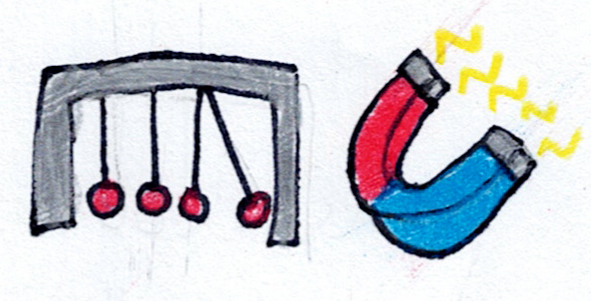 “We’ll use labs to gain an understanding, just because the hands-on aspect of it … ingrains the knowledge better,” Kassar says. AP Physics goes more in-depth than the first year of physics, but Kassar says it’s not an extremely difficult class. “The first physics class, it’s the first time you’re getting all of this knowledge. AP Physics is just a little more application,” he says. Kassar believes that students who have an interest in science, technology, engineering and math (STEM) would enjoy AP Physics. “Any student who enjoyed their (freshman) physics class or enjoys math would love this course and find it pretty easy,” he says.
AP Chemistry
AP Chemistry covers advanced chemistry topics and expands on the knowledge learned in first-year chemistry. Grant’s AP Chemistry teacher, Bill Wilson, teaches with a “flipped classroom” model, in which students watch instructional videos to learn content outside of class and spend class time working on practice problems.  “In-class time is better leveraged for problem solving, so actually putting to application those things that they see in those quick videos, or supplementing where students need extra help with things,” Wilson says. AP Chemistry is a difficult and demanding course. “It serves students who really want to be challenged … I tell them I think this is the hardest class at Grant not to intimidate, but to develop expectations on their approaches to the course,” Wilson says. He suggests the class to those who are interested in pursuing chemistry or any other STEM field in college. He says, “If you’re doing engineering, if you’re doing medicine, if you’re doing any kind of science, this class (and) the challenge that it presents you will help prepare you for any of those fields.”
AP Biology
AP Biology is a high-level biology class that focuses on readings and labs. Kari Taylor, the AP Biology teacher at Grant, highlights the difference in difficulty level between first-year biology and AP Biology.  “It is similar to the standard biology course, but at a much higher level of rigor. There’s a lot of overlap in the topics that you learn, but they also go way more in depth,” she says. “There’s also some new information that we don’t have time to do in the first year bio class.” The class is lab-heavy, with a new lab being completed at least once every two weeks. Taylor believes that seniors who wish for a challenging class will enjoy AP biology, and she suggests it to students who are interested in pursuing science degrees in college.
AP Environmental Science
AP Environmental Science (APES) is a data-driven class that examines the environmental issues that impact our climate. Climate change and human impacts on the environment are recurring themes. Karen Doersam, Grant’s APES teacher, leads the class with a “project-based learning” model.  “Instead of just going through and kind of learning the … little facts about things, we focus more on the project-based model learning,” she says. “It allows students to apply their understanding to real-world situations.” This model also tasks students with learning the majority of concepts outside of school. “We don’t have time to take notes, do labs and activities … So I choose to focus on using the class time for the things that I think are going to be more challenging for students,” Doersam says. She also believes that APES is a class that appeals to many students. “For some students,” she says, “it’s more accessible … it’s the gateway to the other AP science classes.”
AP Calculus
AP Calculus is an advanced math course split into two years worth of content. In the first year, students cover limits, derivatives and integrals. In the second year, students continue to study integrals and move on to sequences, series, vectors, parametric functions and polar coordinates.  Raymond Tate, the AP Calculus teacher at Grant, assigns frequent quizzes that students usually complete with their table groups. “I give a lot of group quizzes because I want all my students to attain the knowledge and have a good understanding of what they’re doing,” Tate says. “With the group quiz … it has enhanced student performance, students that struggle tend to have a better understanding … so then when they get to the unit test, they have confidence.” The group quizzes also build the community of the class. Tate says he’s
had students over the years that have become close friends after being put in groups together. He also believes that the challenge of taking AP Calculus proves to be very beneficial for students. “Mathematical thinking is important for young minds … It definitely helps their brain growth,” he says.
AP Computer Science A
AP Computer Science A is a largely independent class in which students complete coding problems and challenges in the Java Script programming language. Its assignments include packets with coding problems, unit exams and a year-long independent project.  Elias Henkle, a sophomore AP Computer Science student, says that the main focus of the class is to prepare students for the AP exam, but that the class has broader goals as well, including a focus on what students want to use their computer science skills for. Classes mostly consist of independent work time, with some direct instruction and group problem solving mixed in. Henkle suggests the class for people who are curious about computers and their function. “If you’re vaguely interested in … what makes a lot of the stuff that we have in our modern world possible, you should definitely consider taking this class,” he says. He also believes the class is worth the effort: “It’s definitely a step up from the first computer science class, but it’s definitely one that I think you’ll find rewarding and enjoyable.”
Illustrations by Eleanor Price