



















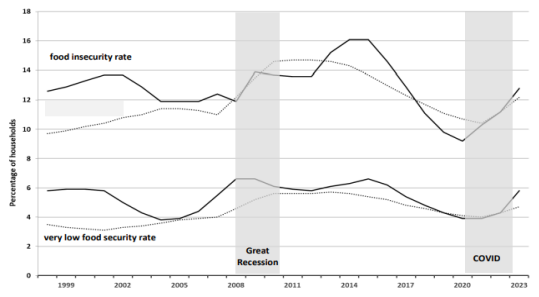
Nearly 16% of Oregon high school students experienced food insecurity between 2021 and 2023, according to a study conducted by Oregon State University.
The issue of food insecurity is slightly less common at Grant High School as far as school administration is aware, but there are still around five to 12 Grant students who experience food insecurity in a given school year.
Grant provides students with free breakfasts and lunches during the week, which allows them to get the nourishment they need during school hours. However, students experiencing food insecurity are still in need of food after school, over weekends and during school breaks. Time away from school can lead to uncertainty in students’ food supply, which is where the 4 Star Hunger Project comes in.
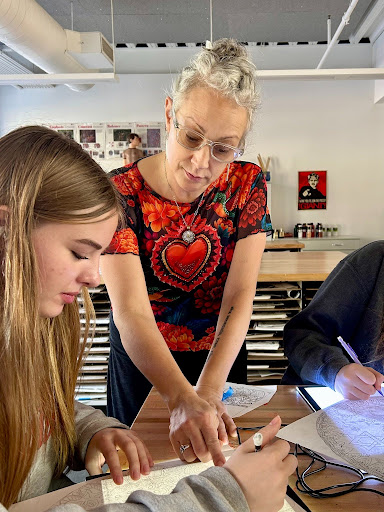
Led by Grant Social Worker Catrina Knoerzer, the 4 Star Hunger Project is dedicated to providing students in need with free meals and snacks over weekends and school breaks. The food, which includes non-perishable items and, on rare occasions, fresh fruit or vegetables, are distributed in backpacks. “Last year, I’d have a family donate fruit every week, which was so helpful because I can’t buy fruit in bulk because I can’t get it (to students) quick enough,” says Knoerzer. Due to the time constraints, perishable food is only encouraged when it is delivered close to the distribution date, which is dependent on the specific days of school breaks or weekends. Most distributions fall on Fridays.
The project relies entirely on community contributions, which come in the form of money and food donations. “I could spend $350 and may get through maybe three weeks,” says Knoerzer. However, she notes that there are many variables that impact how much food is needed. For instance, she says, “I’m serving currently five students, but some of those students have large families, so they get more.” Due to the program’s reliance on contributions from the community, any donations are appreciated and make a difference for the students who depend on it.
Food donations can be dropped off in the main office at Grant with a note that it’s for the “backpack program,” which lets the staff know where to deliver the items. Monetary donations can be given through SchoolPay. Knoerzer started the 4 Star Hunger Project when she came to Grant in 2017. The similar program in Scappoose School District, which she worked on previously, inspired her to start the project at Grant. Her tasks as the program leader include on line grocery shopping to purchase items with monetary donations and assembling backpacks each week. She receives the occasional help of student volunteers or interns, but completes the bulk of the work on her own.
Maintaining the anonymity of student recipients is extremely important to the program. This is upheld by ensuring their names are not given out to anyone but the counseling department.
National events, namely the recent government shutdown, also influence the 4 Star Hunger Project. With the uncertainty the shutdown brought regarding the funding of food assistance programs such as the Supplemental Nutrition Assistance Program (SNAP), Knoerzer anticipated a rise in the number of students depending on the 4 Star Hunger Project.
She says that the program will always welcome donations, noting that “the amount of kids that need the support just continues to grow.”