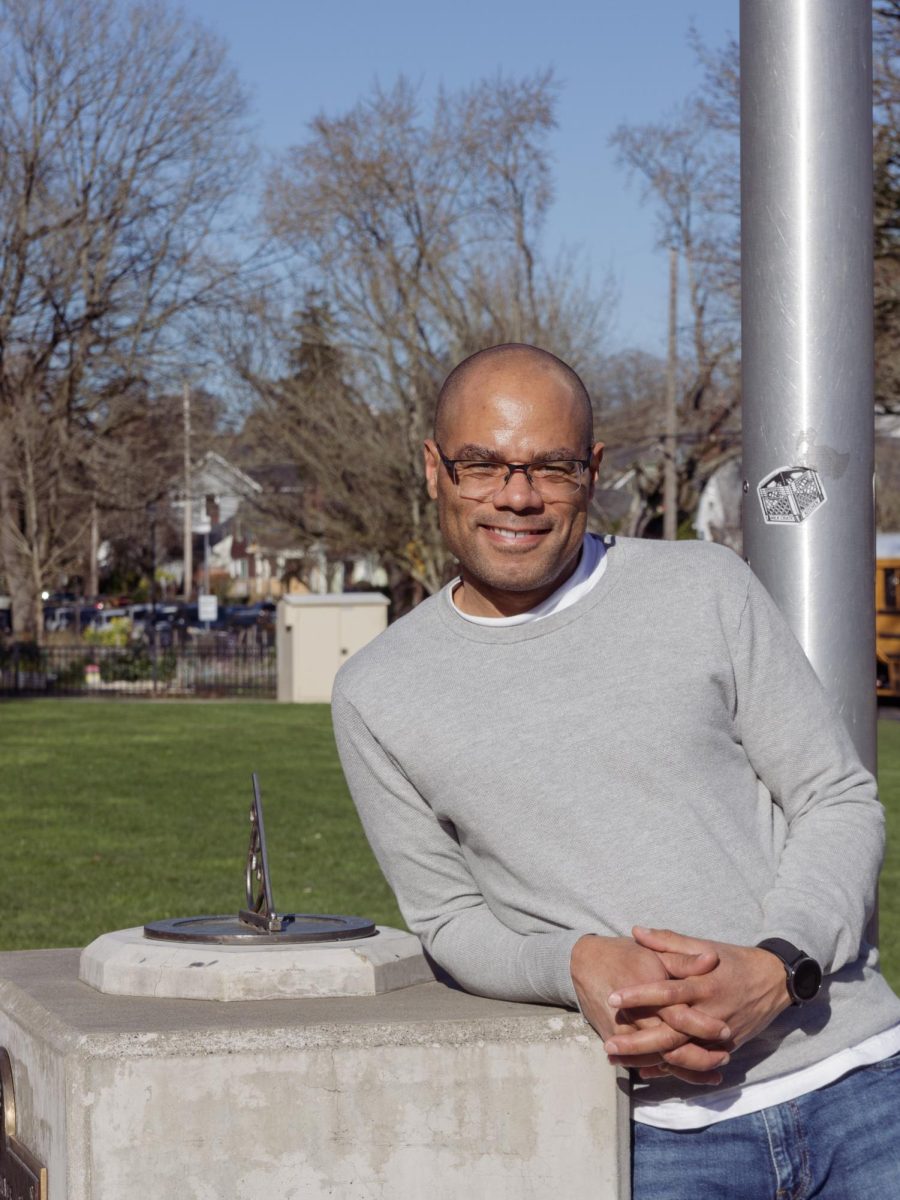
















In 2020, James McGee started a new position as Grant High School’s principal, leaving his former job as vice principal at Lincoln High School behind. Although his time at Lincoln was over, he left a long-lasting legacy at the school.
Before working in education, McGee was involved in nonprofits that allowed him to spend time with children, particularly advocating for Black youth. This role sparked his passion for mentoring young people, which led him to join the education workforce. His first stop was at Lincoln.
He started at Lincoln as a counselor and then became an advisor for the Lincoln Black Student Union (BSU). “I was pretty popular at Lincoln with all the students,” says McGee. After numerous meetings with BSU, he made an observation: “I would watch this group of … Black kids come together,” he says. “And the conversations would be dominated by the girls. And I’m looking at the boys just kind of sitting behind, just eating pizza. And so, I started wondering, what could be done more to support … our Black male students?” McGee began seeking a way to amplify the voices of the male BSU members without diminishing the voices of the female members.
“I was like, when these boys are in my office, they have a lot to say. So what happens if I just get them together? And so we started this club,” says McGee.
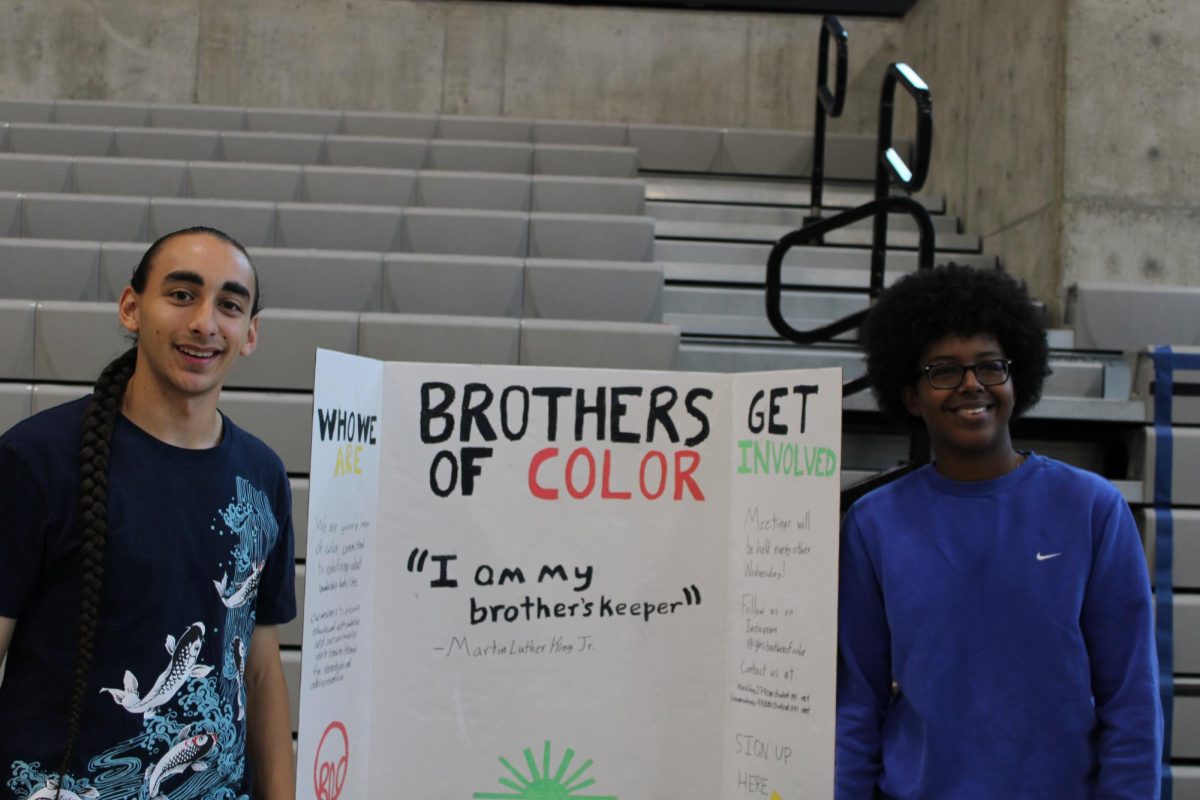
What began as a nameless group of students hijacking the principal’s office for meetings led by their favorite counselor grew into the Brothers of Color (BOC). “They were the strongest club at Lincoln,” says McGee.
At Lincoln and Grant, where the student body is more than 60% white and has a Black population of under 10%, a club like BOC serves an important purpose
“It was a little lonely at the start before I joined Brothers of Color … you’re mostly (with people) that don’t really look like you. There’s always a disconnect when you’re talking to your people that are not people of color,” says Matthew Baba, a 2024 Lincoln graduate and former BOC co-president. The club created a strong community and long-lasting brotherhood between members who still speak to each other and McGee
to this day.
“It brought together a diverse group of male students of color at Lincoln, and kind of brought a sense of community and belonging and opportunity for students,” says Semeredin Kundin, a 2018 Lincoln graduateand former BOC co-president. “People felt really seen and grounded from this club.”
In the club’s earliest stages, it was intended solely for Black male students, but the club quickly became a space for Asian, Latino and other males of color, creating an environment where students of different backgrounds could connect on various issues.
“I think for all of us, it just built that … sensitivity and empathy for each other, of being like, ‘Ultimately, yeah, we might be different, come from different cultures as well, but we do have this shared thing of being the only people that are minorities around here.’ So that sort of united us a little bit,” says Javier Gomez, a former member and co-president of BOC.
Former members noted that before the creation of BOC, there was a disconnect within the small community of nonwhite students at Lincoln.
“(There was) no centralized place where … we could just all meet and discuss the things that were going on back then,” says
Gomez. BOC provided students with the space to gather and find community. As the club advisor, McGee was able to make a special impact on the members.
“McGee essentially became like a second father to us … or that role model that kept us in check,” says Gomez.
McGee took a “tough-love” approach with the members, teaching them harsh yet valuable life lessons they still carry today. “He was really trying to prepare us for (the) world, and teach us that … not everybody’s gonna be super nice to you,” says Gomez. “You might have to work a little bit harder than the person next to you. You might have to work twice as hard just because … you don’t come from a certain background.”
McGee made it a priority that the club would not only learn important lessons but also engage in activities centered around the community. Every year during the holiday season, the club, along with BSU and the Lincoln Alumni Association, would pack over 500 boxes of canned goods and deliver them to families in need. Additionally, at the end of the school year, BOC would travel to King Elementary School in Northeast Portland to help with their annual carnival by running games, dancing and hanging out with the kids.
In preparation for these events, McGee would remind BOC members of their impact on younger children. “I always share with them … when you look in the mirror … you don’t see anything special. But to a 6-year-old, 7-year-old, when you walk into that space … they’re excited,” he says. “And here’s your opportunity to be a role model for those kids.”
Members say they learned many lessons from their time in BOC under the mentorship of McGee. He had high expectations of the members because he had faith that they could reach them; these expectations gave the members opportunities to build drive and motivation. Former members have joined the army, worked in government offices, became artists and attended Ivy League institutions.
BOC offered members a sense of purpose and strength. “I can push myself to do things that I’m uncomfortable with doing, and I’m okay with pushing myself because … I’ve been pushed before and I didn’t break,” says Gomez. “I went through tough moments … and I had help and I had the community, and now again I can go through it and not feel uncomfortable.”
When McGee began working at Grant in 2020, he didn’t start the club at the school right away due to the time commitments of being a principal.
“Everyone assumed that I was going to bring it to Grant,” says McGee. “It was my plan to bring it, but the expectations of a counselor are very different than a principal.”
At the end of the 2024-25 school year, McGee took the first step in revamping BOC at Grant: selecting a few students to be the first members and having their first meeting, which took place in the spring of 2025. “I’m really excited that we’re moving forward with it this year,” says McGee. “We’re definitely going to Grant-ify it … and just try to create opportunities for these kids.”